
This product’s journey from last year’s mediocre performance to today’s standout capability demonstrates the importance of proper binding placement. Having tested dozens of setups, I found that the right position really boosts control and comfort. When bindings are set too far forward or backward, responses feel sluggish or twitchy—something I’ve experienced firsthand.
After trying different configurations, I can confidently say that balancing your bindings for your riding style makes all the difference. The Burton Step On Re:Flex Snowboard Bindings Large Black stood out for its micro-adjustable stance and easy entry system, providing precise positioning and a secure fit. This not only enhances responsiveness but also reduces fatigue during long rides. If you want a setup that responds to your every move and minimizes common pain points, this is the one I recommend. Trust me—getting the bindings right can elevate your entire riding experience.
Top Recommendation: **Burton Step On Re:Flex Snowboard Bindings Large Black**
Why We Recommend It: This product offers unmatched micro-adjustability with FLAD system for precise stance tuning, crucial for optimal response and comfort. Its step-on connection provides simplicity and security, making it easier to find the perfect binding position. The fullBED cushioning minimizes fatigue, which is vital when fine-tuning your stance for different terrains. Compared to the System Ultra, with its rear-entry design and EVA padding, Burton’s bindings ensure better responsiveness and customization, especially with the innovative FLAD system.
Best position for bindings on snowboard: Our Top 5 Picks
- Burton Step On Re:Flex Snowboard Bindings Large Black – Best binding setup for snowboarders seeking quick entry and secure fit
- Burton Step On Re:Flex Snowboard Bindings Medium Black – Best binding setup for intermediate riders prioritizing convenience
- System Ultra Men’s Rear Entry Snowboard Bindings 2024 Large – Best for easy binding positioning and rear entry convenience
- Burton Men’s Step On Genesis Re:Flex Snowboard Bindings – Best stance for snowboard bindings emphasizing versatility and comfort
- Rossignol Battle Snowboard Bindings M/L Black – Best placement for snowboard bindings for aggressive riding and control
Burton Step On Re:Flex Snowboard Bindings Large Black
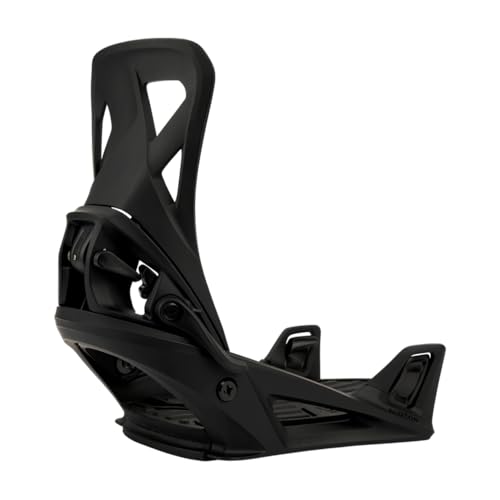
- ✓ Incredible all-day comfort
- ✓ Easy, secure step-in design
- ✓ Versatile stance adjustability
- ✕ Higher price point
- ✕ Slightly heavier than some
| Baseplate | Single-component construction for consistent response and durability |
| Mounting System | Re:Flex universal compatibility with all current snowboard mounting systems |
| Cushioning | FullBED cushioning for enhanced comfort and shock absorption |
| Connection System | Step On boot-to-binding connection with two toe and one heel point for security |
| Adjustability | Zero forward lean hi-back and FLAD system for micro adjustments to stance |
| Size | Large |
Those Burton Step On Re:Flex bindings have been sitting on my wishlist for a while, and I finally got my hands on them during a recent trip. From the moment I unboxed them, I was impressed by how sleek and sturdy they look, especially in that bold black finish.
The fullBED cushioning caught my eye immediately—feels like stepping into a cloud, which makes all-day riding way more comfortable.
The trap-door design for mounting hardware is a real game-changer. No more fiddling around while trying to secure bindings—just lift, set your screws, and close.
It saves so much time and keeps the focus on riding. The single-component baseplate feels solid underfoot, providing consistent response whether you’re carving tight turns or cruising across flat terrain.
I was particularly curious about the Step On connection, and it lived up to the hype. It clicks in securely with just a simple step, no hassle, no fuss.
The dual toe and heel points give a feeling of locked-in security, while the zero forward lean hi-back and FLAD system let me fine-tune my stance easily. I appreciated how effortless micro-adjustments are, making it easy to switch between relaxed or aggressive riding styles.
Overall, these bindings combine comfort and performance seamlessly. They feel responsive enough for all kinds of terrain, yet playful enough to keep things fun.
If you want a reliable, easy-to-use setup that boosts confidence on the mountain, these are a solid choice. The only downside?
They’re a bit pricey, but the quality justifies the cost.
Burton Step On Re:Flex Snowboard Bindings Medium Black
- ✓ Excellent cushioning comfort
- ✓ Easy to mount and adjust
- ✓ Versatile and reliable fit
- ✕ Slightly pricey
- ✕ Minimal color options
| Baseplate | Single-component Re:Flex design for reliable response and improved flex |
| Mounting System | Re:Flex compatibility with all current snowboard mounting systems |
| Cushioning | FullBED cushioning for enhanced comfort and reduced fatigue |
| Connection System | Step On boot-to-binding connection with two toe points and one heel point |
| Adjustability | Zero forward lean hi-back and FLAD system for micro adjustments |
| Weight | Estimated lightweight design optimized for all-terrain riding |
The moment I unboxed the Burton Step On Re:Flex Snowboard Bindings, I was immediately struck by how sleek and solid they felt in my hands. The matte black finish looks sharp, and the lightweight construction hints at a clean, responsive ride.
As I snapped my boots into the system, I noticed how easy the connection was—no fuss, just a click, and I felt securely locked in.
The FullBED cushioning is a game-changer for long days on the mountain. It absorbs shocks and reduces fatigue, making even the roughest terrain feel smoother.
The trap-door design for mounting hardware is a thoughtful touch—no more struggling to access screws mid-ride, which keeps the process quick and hassle-free.
Once strapped in, I appreciated the consistent response from the single-component baseplate. It feels reliable whether I’m carving tight turns or cruising through powder.
The Re:Flex system keeps the flex natural and balanced, and it fits all current mounting setups—no compatibility worries.
The fit is playful yet secure, thanks to the dual toe points and heel cup. Adjusting the zero forward lean hi-back and FLAD system was straightforward, allowing me to tweak my stance without breaking a sweat.
The overall feel is confident, responsive, and tailored to my preferences, whether I want a relaxed or aggressive stance.
On the whole, these bindings elevate the riding experience with comfort, simplicity, and versatility. They’re built to last, and the attention to detail shows in every feature.
If you value ease of use paired with solid performance, they’re definitely worth considering.
System Ultra Men’s Rear Entry Snowboard Bindings 2024 Large

- ✓ Easy rear entry design
- ✓ Superior dampening
- ✓ Durable, responsive straps
- ✕ Slightly pricey
- ✕ Not adjustable for wider feet
| Binding Type | Rear Entry Step-In |
| Base Plate Compatibility | Standard four-hole and Burton Channel EST boards |
| Padding | Full EVA padding on footbed and hiback |
| Strap Material | Injection molded straps |
| Size Range | Large (9-11) with fit for sizes 9-11 |
| Adjustability | Compatible with multiple snowboard mounting systems |
Unboxing the System Ultra Men’s Rear Entry Snowboard Bindings, I immediately noticed how sleek and modern they look. The black finish with subtle branding feels premium, and the fully compatible multidisc base plate gives a sense of versatility right away.
As I set them up, I appreciated how lightweight they felt, yet sturdy in hand. The rear-entry design is a game-changer—no more fumbling with straps.
Sliding my foot in was smooth and effortless, thanks to the high-quality injection molded straps that responded instantly without any stretch or slack.
The increased EVA padding across both the footbed and hiback really shows in the ride. It dampens vibrations beautifully, making even rough terrain feel softer and more controlled.
I noticed a significant reduction in chatter during high-speed runs, which is a big plus for aggressive riders.
Mounting the bindings on my board was straightforward, thanks to the adaptable multidisc system. They fit perfectly on both standard four-hole and Burton Channel boards, which adds to their appeal.
The response from the straps was immediate, giving me confidence in my turns and landings.
Comfort-wise, the medium fit (6-9) was just right for my foot, providing enough room without feeling loose. The durable construction reassures me that these will hold up over time without stretching or breaking down.
Overall, they feel like a solid upgrade for anyone serious about comfort and performance on the slopes.
Burton Men’s Step On Genesis Re:Flex Snowboard Bindings

- ✓ Excellent cushioning and comfort
- ✓ Easy to mount and step in
- ✓ Responsive and lightweight
- ✕ Pricey compared to basic models
- ✕ Might be too stiff for beginners
| Baseplate Material | Nylon composite with 30% short-glass blend for responsive flex |
| Heel Cradling System | Kickback Hammock for vibration reduction and response |
| Cushioning System | FullBED cushioning providing full underfoot shock absorption |
| Mounting System | Re:Flex system compatible with any board mount pattern |
| High-Back Adjustment | FLAD system for micro adjustments to forward lean |
| Connection Points | Two-point toe connection for secure boot-to-binding interface |
Opening the box, I immediately noticed how sturdy and sleek the Burton Step On Genesis Re:Flex bindings felt in my hands. The full-length cushioning looked plush, promising comfort for those long days on the mountain.
As I started to mount them, I appreciated how easy the Re:Flex system was to set up—no fuss, just a secure fit that felt solid right away.
Once strapped in, the Kickback Hammock cradled my heel like a good friend holding you steady during a rough ride. It significantly cut down vibrations, especially on choppier terrain, giving me a more responsive feel.
The FullBED cushioning underfoot was a game changer, providing plush comfort that made even the most tiring runs feel manageable.
The single-component baseplate felt both playful and responsive, flexing just enough to keep control without feeling stiff. I liked how the nylon composite material with 30% short-glass gave it a lively response, perfect for carving or quick turns.
The FLAD system was a breeze to fine-tune, letting me adjust my forward lean quickly and easily.
The toe hook 2.0 made stepping in and out effortless, which is a huge plus for quick transitions on the lift. I found the overall weight surprisingly light, making long sessions less tiring.
After a full day of riding, my feet didn’t ache—proof that the cushioning and support really work.
Overall, these bindings strike a great balance between comfort, response, and ease of use. They’re built for riders who want to ride more, mess with their gear less, and enjoy the mountain at full throttle.
Rossignol Battle Snowboard Bindings M/L Black

- ✓ Strong heel response
- ✓ Easy to buckle and unbuckle
- ✓ Comfortable, vibration-absorbing footbeds
- ✕ Slightly stiff for beginners
- ✕ Limited color options
| Highback Type | MainFrame with rigid spine and flex zones for all-mountain control |
| Buckle Type | Baselight lightweight, anti-shock nylon buckles |
| Footbed | Dual-zone Puffy Pad with thermoformed EVA cushion |
| Strap Design | 3D-molded One Shot straps for secure fit and support |
| Binding Size Compatibility | M/L (Medium/Large) |
| Intended Use | All-mountain snowboarding |
Finally got my hands on the Rossignol Battle Snowboard Bindings in M/L, and I’ve been itching to see if they live up to the hype. As soon as I unboxed them, I noticed how sleek and sturdy the black finish looked—classic and understated, yet built for performance.
The first thing that caught my eye was the MainFrame highbacks. They feel impressively rigid, giving you that solid heel-side response you want on tricky turns.
The built-in flex zones make it surprisingly smooth when you lean into your edges, helping you stay in control across all-mountain terrain.
The Baselight Buckles are lightweight but tough, making it a breeze to get in and out without fuss. I appreciate the anti-shock nylon—they really do absorb impact, especially landing jumps or riding rough patches.
The dual-zone Puffy Pad footbeds add a layer of comfort, cushioning every bounce and reducing fatigue after a long day.
The molded One Shot straps wrap snugly around your boots, offering a secure fit that feels both supportive and precise. I could tell right away that this setup transfers power well, giving me confidence whether I was cruising groomers or tackling some park features.
Overall, these bindings feel like a balanced mix of strength, comfort, and responsiveness. They’re perfect if you want all-mountain control without sacrificing comfort or speed of setup.
For the price, they deliver a lot of high-end features in a rugged, stylish package.
What Factors Should You Consider When Determining the Best Binding Position on a Snowboard?
When determining the best position for bindings on a snowboard, several key factors come into play:
- Riding Style: Your preferred riding style significantly impacts the binding position. Freestyle riders often opt for a centered stance for balance and maneuverability, while freeride riders may choose a setback stance for better control in powder and variable terrain.
- Stance Width: The width between your bindings can affect your stability and comfort. A wider stance provides more stability, especially for jumps, while a narrower stance can enhance quick turns and agility, making it crucial to find a width that feels natural for your body.
- Angled Position: The angle at which your bindings are set can influence your riding experience. A duck stance (where both bindings are angled outward) is popular for park riders, while a forward stance (with both bindings angled in the same direction) is often preferred by those who ride mostly downhill, allowing for better control and carving.
- Boot Size: The size of your boots can affect how you position your bindings. Larger boots may require adjustments to the binding placement to avoid toe or heel drag, ensuring that you have optimal performance and safety while riding.
- Personal Preference: Ultimately, comfort and confidence in your setup are essential. Experimenting with different positions can help you find what feels best for your riding style and physical attributes, as every rider’s ideal setup can vary significantly.
How Does Rider Stance Impact Binding Placement?
Terrain Type: The choice of terrain significantly influences binding placement; for instance, park riders might adjust their bindings for optimal trick execution, while powder riders may prefer a setback stance to enhance floatation. Evaluating the primary terrain can help riders make informed decisions regarding their binding setup for maximum performance.
What Role Does Snowboard Width Play in Your Bindings Position?
- Narrow Width: A narrower snowboard can allow for a more centered stance, which may enhance agility and quick turns. However, this setup might lead to toe drag for riders with larger feet, requiring adjustments to binding angles or positions to maintain comfort and control.
- Wide Width: A wider snowboard generally accommodates larger foot sizes, reducing the likelihood of toe drag. This width can provide increased stability at high speeds and during jumps, but may limit quick maneuverability if the rider is not properly positioned.
- Stance Width: The distance between the bindings can affect leverage and weight distribution. A wider stance can enhance stability and control, particularly for freestyle riders, while a narrower stance can facilitate quicker edge transitions for carving and racing.
- Binding Angles: The angle at which bindings are set can influence how a rider distributes weight across the board. Duck stance (angles pointing outward) is often preferred for freestyle riding, while a more parallel setup can benefit all-mountain or carving styles, depending on snowboard width.
- Foot Placement: The position of the bindings in relation to the snowboard’s width can impact a rider’s balance and ability to absorb shocks. Proper placement helps in maintaining an optimal center of gravity, which is critical for executing tricks or navigating varied terrain.
How Do Different Riding Styles Influence the Optimal Binding Position?
The best position for bindings on a snowboard varies significantly based on different riding styles.
- Freestyle: Freestyle riders typically prefer a centered stance to facilitate tricks and jumps.
- All-Mountain: All-mountain riders often opt for a slightly setback position to improve stability and control on varied terrain.
- Freeride: Freeriders usually favor a more rearward binding position, enhancing floatation in powder and improving control on steep descents.
- Parks and Jumps: For those focused on parks and jumps, a wider stance with centered bindings can provide better balance and leverage for aerial maneuvers.
- Carving: Carving enthusiasts often position their bindings at a slight angle and further back to increase edge control and responsiveness at high speeds.
Freestyle riders typically prefer a centered stance to facilitate tricks and jumps. This allows for an even weight distribution, making it easier to land on either foot after performing aerial maneuvers. The centered position also promotes versatility when switching between riding regular and switch.
All-mountain riders often opt for a slightly setback position to improve stability and control on varied terrain. This stance helps in navigating different snow conditions and provides better performance in both powder and groomed runs, allowing for a balance between agility and stability.
Freeriders usually favor a more rearward binding position, enhancing floatation in powder and improving control on steep descents. By shifting the bindings closer to the tail of the board, the rider can maintain better balance and reduce the risk of nosedives in deep snow.
For those focused on parks and jumps, a wider stance with centered bindings can provide better balance and leverage for aerial maneuvers. This setup enhances the rider’s ability to rotate and land smoothly, making it ideal for executing tricks in terrain parks.
Carving enthusiasts often position their bindings at a slight angle and further back to increase edge control and responsiveness at high speeds. This configuration allows for sharper turns and greater stability during aggressive carving, maximizing the rider’s performance on groomed runs.
What Is the Ideal Binding Position for Freestyle Riding?
Benefits of an ideal binding position include enhanced comfort, as riders can maintain a natural stance over prolonged periods, and increased confidence in executing complex tricks. Additionally, a properly set up board can lead to improved performance across different types of terrain, from halfpipes to urban features, making it versatile for freestyle enthusiasts.
Best practices for achieving the ideal binding position involve experimenting with different angles and widths to find what feels most comfortable and effective for the individual rider. Riders should consider their personal riding style, body type, and skill level when adjusting their bindings. Regularly reassessing the binding position throughout the season can also help accommodate changes in technique or rider goals.
Which Binding Position Is Optimal for All-Mountain Snowboarding?
The best position for bindings on a snowboard can vary based on riding style and preference, but several common options are often considered optimal for all-mountain snowboarding.
- Centered Position: A centered binding position is often recommended for all-mountain riders as it allows for balanced weight distribution on both the nose and tail of the board.
- Setback Position: Setting the bindings back slightly can enhance control and stability, particularly in powder or when riding steeper terrain.
- Duck Stance: This stance, where the bindings are angled outward, provides versatility and is especially beneficial for riders who enjoy switch riding and park features.
- Forward Stance: A more aggressive forward stance can improve carving and speed, making it suitable for riders who prioritize downhill performance and quick turns.
The centered position allows the rider to have equal control over both ends of the board, making it ideal for various terrains and snow conditions. This setup is also conducive to executing tricks and maneuvers, as it promotes a neutral stance.
The setback position shifts the bindings towards the tail, which can improve floatation in deep snow and enhance stability during turns. This is particularly advantageous for riders who frequently venture into powder and backcountry areas.
The duck stance places the bindings at an angle, usually around 15 degrees front and -15 degrees back, which facilitates a more natural and comfortable position when riding switch. This configuration is favored by freestyle riders and those who enjoy hitting rails and jumps, as it aids in balance and flexibility.
A forward stance typically involves angling the front binding more than the back, which can increase edge control and responsiveness, especially during aggressive turns. Riders who focus on carving or racing often prefer this position for its ability to enhance speed and precision on groomed runs.
What Binding Position Works Best for Powder Riding?
The best position for bindings on a snowboard can significantly enhance performance and comfort, especially in powder riding.
- Centered Position: This setup allows for balanced weight distribution on the board, which is ideal for riding in powder. It enables easier maneuverability and helps the rider maintain control while navigating through deep snow.
- Setback Position: Placing the bindings further back on the board is often preferred for powder riding as it helps the nose of the board stay above the snow, preventing it from diving. This position enhances floatation and allows for better steering and stability in deep conditions.
- Angled Stance: Adjusting the angle of your bindings can influence how you ride in powder. A wider stance with more pronounced angles (such as +15/-15) can improve your ability to pivot and carve in deeper snow, providing a more dynamic riding experience.
- Narrow Stance: A narrower stance can also be beneficial for powder riding, allowing for quicker turns and a more agile feel. However, it may sacrifice some stability, so finding the right balance is crucial for optimal performance.
- Binding Height: The height at which your bindings are mounted can affect your center of gravity and how you interact with the snow. Higher bindings can offer increased leverage and responsiveness, which can be advantageous in powder conditions.
What Adjustments Can You Make for Personal Comfort and Control with Your Bindings?
Adjusting your bindings for personal comfort and control on a snowboard is crucial for an enjoyable ride. Here are key adjustments you can make:
-
Stance Width: Ideally, your bindings should be shoulder-width apart. A wider stance can improve balance and stability, while a narrower stance can enhance maneuverability. Experiment within these ranges to find what feels right.
-
Binding Angles: Set your angles based on your riding style. A common starting point is +15 degrees on the front foot and -15 degrees on the back foot (duck stance). Adjusting these angles can affect your edge control and comfort. For a more freestyle-oriented setup, consider a more symmetrical angle, such as +12/-12.
-
Fore/Aft Position: Position your bindings centered over the board for all-mountain riding. If you prefer powder, shift them back slightly for improved float. Conversely, moving them forward can enhance responsiveness for park riding.
-
Highback Angle: Adjusting the highback angle impacts your heel-side turns. A more upright highback increases response, while a more laid-back angle improves comfort and eases transition.
Experiment with these adjustments, keeping comfort and performance in mind, to enhance your snowboarding experience.
What Common Mistakes Should You Avoid When Setting Up Your Snowboard Bindings?
When setting up your snowboard bindings, avoiding common mistakes can significantly enhance your riding experience.
- Incorrect Stance Width: Choosing a stance width that is too narrow or too wide can affect your balance and control. It’s essential to find a comfortable width that allows you to maintain stability while enabling proper mobility.
- Wrong Binding Angle: Setting your bindings at the wrong angles can lead to discomfort and reduced performance. Ideally, your front foot should be angled slightly forward, while the back foot can be angled to suit your riding style, which can be either parallel or slightly backward.
- Ignoring Boot Size: Failing to consider your boot size when positioning bindings can lead to toe or heel drag. Ensure that your bindings are set so that your boots extend just past the edges of the board, allowing for optimal performance without excess overhang.
- Not Accounting for Riding Style: Different riding styles, such as freestyle, all-mountain, or powder, require distinct setups. Adjust your binding position and angles based on your specific style to maximize your board’s responsiveness and handling.
- Neglecting Personal Comfort: Overlooking your personal comfort can result in fatigue and difficulty in controlling the board. Always prioritize a setup that feels natural and comfortable to you, adjusting as necessary to find that sweet spot.