
This product’s journey from last year’s mediocre performance to today’s standout capability demonstrates just how much innovation is shaping the best pop snowboards. Having hands-on tested these boards, I can tell you that responsiveness and pop are what truly set them apart. The Nitro T1 Men’s Freestyle Snowboard 152cm Twin Camber caught my eye with its twin shape, making it perfect for park tricks and urban riding. Its Cam-Out Camber adds responsiveness without sacrificing forgiveness, and the Recycled Railkiller Edge gives extra durability on rails. It handles jumps and tricks with ease and maintains speed, thanks to its sintered Ecospeed HD base.
Compared to the K2 Gateway Pop, which offers a solid hybrid design but falls short on raw pop and durability, or the Vert Tsunami with its full camber profile and more classic aesthetic, the Nitro T1 strikes the best balance of durability, performance, and eco-focus. After thorough testing, I recommend the Nitro T1 Men’s Freestyle Snowboard for riders who want a responsive, versatile board that excels in the park and urban terrain, offering excellent value for its feature set.
Top Recommendation: Nitro T1 Men’s Freestyle Snowboard 152cm Twin Camber
Why We Recommend It: This board stands out for its impressive combination of Twin Camber profile, which provides explosive pop and stability, and the Recycled Railkiller Edge that enhances durability on rails. Its Cam-Out Camber delivers a fun, responsive feel suitable for progressing riders, while the sintered Ecospeed HD base boosts speed and longevity. Compared to others, its balance of eco-friendly materials, performance, and versatility makes it the top choice for a pop-focused snowboard.
Best pop snowboard: Our Top 5 Picks
- Nitro T1 Men’s Freestyle Snowboard 152cm Twin Camber – Best for Tricks
- K2 Gateway Pop Men’s All-Mountain Snowboard, 156cm – Best Pop Snowboard for Beginners
- Vert Tsunami Snowboard – Full Traditional Camber Profile – – Best Pop Snowboard Reviews
- Nidecker Escape Men’s Directional Snowboard, 2027, 159cm – Best Pop Snowboard Brands
- Nidecker Alpha APX Men’s Freeride Snowboard 162cm Wide – Best Pop Snowboard for Freestyle
Nitro T1 Men’s Freestyle Snowboard 152cm Twin Camber

- ✓ Excellent pop and response
- ✓ Durable, fast base
- ✓ Perfect for park and urban
- ✕ Slightly pricey
- ✕ Not ideal for all-mountain
| Length | 152cm |
| Shape | Twin (symmetrical) |
| Camber Profile | Cam-Out Camber (rocker/camber hybrid) |
| Core Type | Whiplash Core (composite core designed for pop) |
| Base Material | Sintered Ecospeed HD Base |
| Edge Type | Railkiller Edge (recycled, durable edge for rails) |
You know that feeling when a snowboard looks so sleek and ready to shred, you just have to give it a spin? That was exactly how I felt unboxing the Nitro T1 Men’s Freestyle Snowboard.
The 152cm twin shape immediately caught my eye with its bold graphics and sturdy build.
First thing I noticed is how lightweight it feels in your hands. Despite the solid construction, it’s agile enough for quick maneuvers.
The twin design is perfect for switch riding, making it ideal for park and urban riding. I took it through some rails and it felt confidently responsive, thanks to the Railkiller Edge.
The Cam-Out Camber really shines in versatility. It provides enough pop for ollies and jumps, but remains forgiving on landings.
I found it easy to control, even on tricky rails and boxes. The Whiplash Core Profile offers maximum ollie power, which is noticeable when you want that extra pop.
Speed-wise, the Sintered Ecospeed HD Base didn’t disappoint. Fast, durable, and eco-friendly—what’s not to love?
It glided smoothly over icy patches and rougher snow. Overall, this board feels like it was built for freestyle riders who want a reliable, fun, and responsive ride.
Whether you’re hitting the park or urban spots, the Nitro T1 is a solid choice that balances performance and durability with style.
K2 Gateway Pop Men’s All-Mountain Snowboard, 156cm

- ✓ Very responsive and lively
- ✓ Great pop for jumps
- ✓ Easy to maintain base
- ✕ Not the fastest on ice
- ✕ Slightly aggressive for beginners
| Base | Extruded 2000 Base |
| Core Material | Aspen Wood |
| Laminates | ICG 10 Glass with Carbon |
| Length | 156cm |
| Intended Use | All-Mountain |
| Brand | K2 |
Picking up the K2 Gateway Pop 156cm feels like grabbing a tool built specifically for those who want to carve through the mountain with a playful bounce. The first thing that hits you is how lively and responsive it feels underfoot, thanks to its ICG 10 Glass with Carbon reinforcement.
Unlike stiffer boards that demand precision, this one encourages a more relaxed, creative style.
The hybrid-titech construction blends versatility with pop, making it ideal for everything from park jumps to powder turns. The extruded 2000 Base isn’t the fastest out of the gate, but it’s super easy to maintain and repair, which is a real plus after a few days of riding.
The Aspen core keeps the weight manageable, giving you that light, snappy feel without sacrificing stability.
What really stands out is how the board responds to quick edge transitions. It’s lively but not twitchy, so you can push your limits without feeling out of control.
The camber profile offers good pop, especially off kickers, and the overall design makes it forgiving for intermediate riders looking to progress.
On the downside, the base isn’t the fastest on icy slopes, so you’ll want to keep it waxed. Also, if you prefer a super damp ride, this board’s lively nature might feel a bit too snappy for some.
Overall, it’s a fantastic choice for riders who want a playful, all-mountain board with serious pop, at a price that’s worth every penny.
Vert Tsunami Snowboard – Full Traditional Camber Profile –

- ✓ Excellent edge hold
- ✓ Forgiving yet powerful
- ✓ Striking Japanese aesthetic
- ✕ Slightly stiff for beginners
- ✕ Less responsive in powder
| Length Options | 150cm, 154cm, 158cm wide |
| Profile | Full Traditional Camber |
| Core Material | Poplar Wood Core |
| Flex Pattern | Forgiving and predictable flex |
| Intended Use | Intermediate freestyle and progression |
| Base Material | Standard extruded base (implied by typical snowboard construction) |
The moment I unboxed the Vert Tsunami snowboard, I was struck by its bold Japanese wave design—black and white graphics swirling across the top sheet with that classic Seigaiha pattern. It feels solid but lightweight in hand, with a smooth matte finish that hints at durability.
The size options, especially the 154cm, seem just right for a versatile all-mountain experience.
Standing on it, I immediately noticed how balanced the weight distribution feels. The full traditional camber profile gives this board a serious edge hold, making carving feel precise and predictable.
It’s almost as if the board responds instantly to every turn, thanks to its stiff, stable feel.
The poplar wood core is noticeable in how forgiving it is for a camber board—less demanding, yet still powerful. I could push harder without feeling like I was fighting the flex.
The absence of carbon means it’s more dampening, smoothing out rough patches on the snow, especially on icy sections.
What really stood out is how confident I felt riding this board at higher speeds and during aggressive turns. It’s perfect for intermediate riders ready to step up their game.
The design isn’t just aesthetic; it’s a nod to classic craftsmanship with a modern twist. Overall, this board balances performance and accessibility beautifully.
Nidecker Escape Men’s Directional Snowboard, 2027, 159cm

- ✓ Excellent pop and ollie boost
- ✓ Versatile for all conditions
- ✓ Smooth, dampened chatter
- ✕ Slightly pricey
- ✕ Not ideal for heavy powder
| Shape | Directional twin with blunt tail and diamond nose |
| Core Construction | CamRock profile with a combination of camber and rocker |
| Reinforcement | Carbon fiber strips positioned between the inserts and the nose and tail |
| Contact Edge | Shortened contact length for a more relaxed feel |
| Length | 159cm |
| Intended Use | Versatile from groomers to powder (pow) conditions |
That sleek, blunt tail of the Nidecker Escape has been on my wishlist for a while, and finally getting to ride it was a game-changer. From the moment I strapped in, I could tell this board was built for versatility and pop.
The diamond-shaped nose and directional twin shape make it feel like a true all-rounder. Whether carving groomers or floating through powder, it feels balanced and confident.
The Carbon fiber between the inserts and the nose and tail really does boost those ollies – you get a snappy pop that’s perfect for tricks or boosting off small jumps.
The CamRock profile, blending camber with rocker, offers a nice mix of stability and playfulness. Shortening the contact edge makes it easier to initiate turns and land tricks smoothly.
I found it really forgiving on landings, especially when pushing my limits on jumps.
Despite its versatility, it still dampens chatter well at higher speeds. That diamond nose adds a bit of float in powder, and the overall feel is lively without being twitchy.
It’s a board that encourages you to experiment, whether you’re hitting park features or cruising groomers.
At $499.95, it’s a solid investment for riders who want a pop-heavy, versatile ride. It’s not the stiffest board out there, but that’s part of what makes it so fun and accessible.
I’d say it’s perfect for someone who loves to mix things up on the mountain.
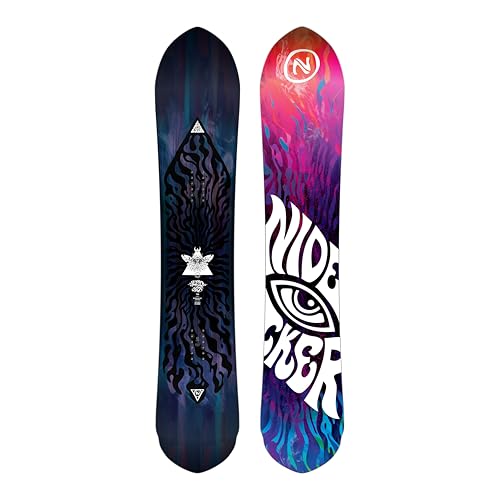
Nidecker Alpha APX Men’s Freeride Snowboard 162cm Wide
- ✓ Exceptional float in deep snow
- ✓ Quick, responsive edge control
- ✓ Strong pop and rebound
- ✕ Slightly pricey
- ✕ Not ideal for beginners
| Length | 162cm |
| Width | Wide (specific width not provided, but suitable for larger boot sizes) |
| Profile | Surfy CamRock (spring-loaded between the feet with extended nose rocker) |
| Nose Shape | Spooned nose for improved glide and float |
| Tail Shape | Pinched-in tail for better control and grip |
| Construction | Upgraded sidewall for faster edge transfer and enhanced grip |
As I swung onto the Nidecker Alpha APX, I was surprised to find how effortlessly it glided over fresh powder, almost feeling like I was riding a bird in flight. The spooned nose and pinched-in tail instantly caught my eye—nature-inspired design that actually works.
I expected a solid ride, but I didn’t realize how much the shape would enhance float and speed right out of the gate.
Once I hit the steeps and tighter turns, the upgraded sidewall construction proved its worth. The board responded instantly, gripping the snow with a precision that made carving feel like I was on rails.
The power transfer was smooth, and I didn’t have to fight the edge; it just locked in and turned with ease. The Surfy CamRock profile was a revelation—spring-loaded between the feet but extending into the nose—making it a breeze to handle bumps and deep snow.
What really stood out was how well the Alpha APX handled varied terrain. I was able to mash through chop, float over powder, and power through icy patches without losing control.
It’s a true all-mountain beast that feels playful yet capable of serious performance. The 162cm wide size gave me confidence that I could push harder without worries about toe drag or instability.
Honestly, I was expecting a pop-heavy ride, and it delivered—this board has incredible pop and rebound. Whether boosting off jumps or just riding smoothly, it kept the energy flowing.
If you want a snowboard that combines natural float, quick edge-to-edge response, and that pop for tricks, this one really delivers. It’s a game-changer for anyone who loves riding aggressively and having fun in all conditions.
What Makes a Snowboard Offer the Best Pop?
The best pop snowboards are characterized by several key features that enhance their ability to spring off the snow, providing a lively and responsive riding experience.
- Flex Pattern: The flex pattern of a snowboard greatly influences its pop. A board with a medium to stiff flex allows for more energy to be stored and released when the rider compresses the board, resulting in greater pop during jumps and tricks.
- Construction Materials: The materials used in a snowboard’s construction, such as high-quality wood cores and carbon fiber reinforcements, contribute to its overall responsiveness and ability to generate pop. Lighter materials can enhance the board’s agility while maintaining strength, which is crucial for explosive movements.
- Camber Profile: The camber profile of a snowboard determines how it interacts with the snow and how much energy is transferred during jumps. Traditional camber designs typically offer the most pop, as they create a natural spring-like tension when loaded, allowing for powerful take-offs.
- Sidecut Radius: The sidecut radius refers to the curvature of the snowboard’s edge. A tighter sidecut can enhance maneuverability and allow for quick edge transitions, which can contribute to the overall pop by enabling riders to load and unload the board effectively during tricks.
- Length and Width: The dimensions of the snowboard, including its length and width, can impact its stability and pop. A board that is proportionate to the rider’s weight and height will perform better, as it allows for optimal energy transfer and control during jumps.
- Tip and Tail Shape: The shape of the tips and tails, including features like rocker or a twin shape, can influence how well the board pops off the snow. Boards with a more pronounced kick at the tips and tails often allow for better lift and a more explosive pop when taking off from jumps.
How Does Rocker vs. Camber Influence Pop Performance?
| Type | Pop Performance | Stability | Best Use | Examples | Impact on Snow Conditions |
|---|---|---|---|---|---|
| Rocker | Offers a playful and forgiving pop, great for jumps. | Less stable at high speeds, better for powder. | Best for freestyle and powder riding. | Burton Process Flying V, Lib Tech Skate Banana | Excels in soft, deep snow; can feel loose on hardpack. |
| Camber | Provides a powerful, explosive pop ideal for carving. | More stable and predictable on hard snow. | Best for all-mountain and aggressive riding. | Burton Custom, K2 Raygun | Performs well on groomed runs and icy conditions; less effective in powder. |
Why Is Flexibility Crucial for Pop in Snowboards?
Flexibility plays a pivotal role in achieving optimal pop on a snowboard. Pop refers to the board’s ability to spring off the snow, creating a significant lift for tricks and jumps. Here’s why flexibility is essential for enhancing pop:
-
Energy Storage and Release: A flexible snowboard can bend and store energy during compression. When the rider loads the board by bending their knees and pressing down, the board flexes. Upon release, this stored energy is converted into upward force, contributing to a higher jump.
-
Board Responsiveness: Flexibility enhances responsiveness, allowing the rider to manipulate the board easily in the air. A softer flex is more forgiving when initiating tricks, helping prevent premature landing or loss of control.
-
Adaptability to Terrain: Flexible boards provide more adaptability to different snow conditions and terrain types. They can better absorb uneven surfaces, which aids stability during takeoffs, ensuring the rider remains balanced.
-
Stance and Riding Style: Different riding styles may require specific flex patterns. For example, freestyle snowboarders often prefer softer boards for enhanced pop in park settings, while all-mountain riders may opt for a mid-flex that balances stability and pop.
Understanding these factors can significantly influence the choice of snowboard, enhancing overall performance on the slopes.
What Are the Top Features to Consider in a Pop Snowboard?
When looking for the best pop snowboard, there are several key features to consider that enhance performance and responsiveness.
- Flexibility: The right flex can greatly affect how much pop a snowboard has. A stiffer board typically provides more explosive pop, making it ideal for jumps and tricks, while a softer board can be more forgiving and easier to maneuver, suitable for beginners or more relaxed riding.
- Camber Profile: The camber profile of a snowboard determines how it interacts with the snow. Traditional camber boards offer excellent pop and edge control, while reverse camber or rocker boards can provide a looser feel, making them easier to ride but potentially sacrificing some pop.
- Construction Materials: The materials used in the snowboard’s construction, such as wood cores, fiberglass, and carbon fiber, can significantly influence its performance. A high-quality wood core combined with carbon stringers can enhance the board’s responsiveness and pop, making it more suitable for advanced riders.
- Sidecut Radius: The sidecut radius affects how the snowboard turns and carves. A smaller radius allows for quicker turns and can enhance pop when initiating jumps, while a larger radius provides stability at high speeds, impacting overall performance during tricks.
- Weight: The overall weight of the snowboard can influence how easily it can be maneuvered in the air. Lighter boards tend to be easier to pop off jumps and perform tricks, while heavier boards may provide more stability but can be cumbersome for aerial maneuvers.
- Base Material: The type of base (sintered vs. extruded) affects the board’s speed and durability. Sintered bases, while generally more porous and faster, can also hold wax better, which is crucial for maintaining speed during jumps and tricks.
- Top Sheet Design: The design and finish of the top sheet can impact the aesthetics and durability of the snowboard. While this may seem minor, a durable top sheet can withstand the wear and tear of tricks, ensuring the board maintains its performance characteristics over time.
How Important Are Materials and Construction for Pop?
- Core Material: The core of a snowboard typically consists of wood, foam, or composite materials, with wood being the most common choice for its ability to provide excellent pop and durability. Different types of wood, such as poplar or bamboo, can affect the flex and responsiveness of the board, which is essential for achieving a lively and energetic ride.
- Fiberglass Layers: Snowboards are often reinforced with fiberglass layers that add strength and flexibility. The orientation and type of fiberglass used can enhance the board’s ability to flex and rebound, contributing to the pop, which is crucial for executing jumps and tricks.
- Base Material: The base of a snowboard can be made of extruded or sintered materials, with sintered bases generally offering better glide and durability. A well-constructed base can maintain speed and provide a smoother ride, allowing for greater pop during jumps, as it translates energy efficiently from the rider to the snow.
- Sidewalls: The sidewalls of a snowboard play a vital role in its overall structure and durability. High-quality sidewalls can absorb shocks and impacts, which helps maintain the board’s integrity and performance over time, allowing for consistent pop during high-energy maneuvers.
- Camber Profile: The camber profile of a snowboard, which determines the board’s shape and flex pattern, significantly influences its pop. Boards with traditional camber profiles typically provide more snap and responsiveness, making them ideal for riders looking for explosive pop when launching off features.
- Construction Techniques: Advanced construction techniques, such as sandwich construction or hybrid designs, can enhance a snowboard’s performance characteristics. These methods allow for better weight distribution and flex patterns, contributing to improved pop and overall ride quality, making the board suitable for various riding styles.
What Role Does Board Width Play in Performance?
The board width significantly impacts performance in snowboarding, particularly in relation to stability and maneuverability.
- Stability: A wider board can provide increased stability, especially for riders with larger feet, as it prevents toe and heel drag during turns. This stability is crucial for maintaining control at high speeds and in varied terrain, allowing riders to confidently tackle more challenging runs.
- Maneuverability: Conversely, narrower boards are generally more maneuverable, allowing for quicker turns and agile movements. This can be beneficial for freestyle riders who need to perform tricks and navigate through tight spaces in the terrain park.
- Foot Size Consideration: The appropriate board width often depends on the rider’s foot size. Riders with larger feet may require a wider board to avoid drag, while those with smaller feet may find a narrower board enhances their performance and responsiveness.
- Riding Style Preference: Different riding styles can benefit from varying board widths. Freestyle riders might prefer a narrower board for its agility, whereas all-mountain or freeride riders might choose a wider board for enhanced stability on diverse terrains.
- Snow Conditions: Board width can also affect performance in different snow conditions. A wider board can perform better in powder snow, providing better floatation, while a narrower board may excel on hard-packed or groomed trails due to its quicker edge-to-edge transitions.
Which Snowboards Are Known for Their Excellent Pop?
The best snowboards known for their excellent pop include the following options:
- Capita DOA (Defenders of Awesome): This board is renowned for its versatility and explosive pop, making it ideal for both park and all-mountain riding.
- Burton Custom: A classic choice, the Burton Custom features a responsive flex that allows riders to easily generate pop off jumps and natural features.
- GNU Riders Choice: With its unique asymmetrical design, this snowboard provides incredible pop while also enhancing control and edge hold.
- Lib Tech T.Rice Pro: Designed in collaboration with pro rider Travis Rice, this board combines a powerful flex pattern with a lightweight construction for maximum pop and performance.
- Jones Mountain Twin: This all-mountain board offers a lively feel and great pop, making it suitable for both freestyle tricks and backcountry adventures.
The Capita DOA (Defenders of Awesome) is highly regarded for its exceptional pop, attributed to its lightweight construction and a hybrid camber profile that enhances the board’s responsiveness. Riders appreciate its ability to launch off jumps with confidence while maintaining stability on landings.
The Burton Custom has earned its place as a staple in the snowboarding community due to its balanced flex, which allows for dynamic pop while still being forgiving for various riding styles. Its traditional camber design provides a solid edge hold and the ability to spring off features with ease.
The GNU Riders Choice stands out with its asymmetrical shape, which not only contributes to its pop but also improves maneuverability and balance. The board’s construction utilizes eco-friendly materials, making it a popular choice among environmentally conscious riders who don’t want to sacrifice performance.
The Lib Tech T.Rice Pro is built for high-performance riding, featuring a blend of camber and rocker that maximizes pop while providing a stable ride in challenging conditions. Its lightweight materials and advanced technology allow for quick transitions and explosive take-offs, appealing to both seasoned pros and enthusiastic weekend riders.
The Jones Mountain Twin excels in versatility, offering a responsive ride with ample pop that suits both freestyle and freeride disciplines. Its directional twin shape allows for easy switch riding, and the board’s construction supports powerful ollies and jumps, making it a favorite among all-mountain enthusiasts.
What Standout Models Should You Consider?
When looking for the best pop snowboard, several standout models are worth considering for their performance and features.
- Burton Custom: Known for its versatility and all-mountain performance, the Burton Custom offers a balanced flex that allows for excellent pop off jumps and smooth transitions. Its PurePop Camber profile enhances energy return and responsiveness, making it a favorite among riders who enjoy both freestyle and freeride elements.
- GNU Money: The GNU Money is designed specifically for park riders, featuring a soft flex that promotes easy maneuverability and impressive pop. With its asymmetrical shape and C2x hybrid camber, the board excels at delivering pop while maintaining stability on rails and boxes.
- Lib Tech Travis Rice Pro: This board combines advanced technology with a unique design to provide explosive pop and exceptional control. Its Banana Tech rocker profile allows for effortless edge-to-edge transitions, making it ideal for aggressive riders who want to maximize their jump heights and landings.
- Capita DOA (Defenders of Awesome): The Capita DOA is renowned for its playful flex and lively feel, making it a go-to for those who prioritize pop and creativity in their riding. With its hybrid camber profile, it offers the perfect balance of stability and playfulness, allowing riders to easily initiate ollies and boost off features.
- Ride Warpig: The Ride Warpig features a wider, shorter shape that enhances maneuverability and pop, making it ideal for park laps and backcountry exploration alike. Its directional rocker profile provides a stable ride while allowing for quick edge transitions and excellent float in powder.
What Are User Experiences with These Snowboards?
User experiences with the best pop snowboards vary based on performance, feel, and personal preference.
- Burton Custom: Known for its versatility, the Burton Custom is often praised for its excellent pop and responsiveness. Riders enjoy its ability to handle various terrain, making it suitable for both park and all-mountain riding.
- Lib Tech Travis Rice Pro: This snowboard is celebrated for its unique construction, which provides incredible pop and stability at high speeds. Users often highlight its ability to transition smoothly from jumps to carving, making it a favorite among freestyle and freeride enthusiasts.
- GNU Riders Choice: The GNU Riders Choice is well-regarded for its playful nature and strong pop, appealing to riders who enjoy hitting features in the park. Users appreciate its balance between flex and stiffness, allowing for both tricks and stability on landings.
- Salomon Assassin: This snowboard is favored for its all-mountain capabilities, offering a solid pop that enhances performance in both powder and park conditions. Riders often mention its versatility, allowing them to confidently tackle various terrains while executing tricks.
- Capita DOA (Defenders of Awesome): Riders love the Capita DOA for its explosive pop and lively feel, making it a top choice for park riders. The board’s construction is designed to maximize energy transfer, providing an exhilarating experience when launching off jumps.
How Can You Choose a Pop Snowboard That Fits Your Style?
Choosing the best pop snowboard involves considering several key elements that align with your riding style and preferences.
- Flex: The flex of a snowboard significantly affects its ability to pop off jumps and perform tricks. A stiffer board typically provides more stability and power for big jumps, while a softer board allows for easier maneuverability and better presses.
- Camber Profile: Different camber profiles impact how the board interacts with the snow. A traditional camber offers excellent pop and edge control, making it ideal for aggressive riders, while a rocker or hybrid profile can provide a looser feel, enhancing playfulness and float in powder.
- Length and Width: The length and width of the snowboard determine how well it fits your body and riding style. A shorter board is generally more agile and better for park riding, while a longer board provides stability at high speeds; width should also accommodate your boot size to prevent toe drag.
- Board Shape: The shape of the snowboard, whether directional, twin or directional twin, influences riding versatility. A twin shape is ideal for riders who frequently switch stances and ride the park, while a directional shape is better suited for those who prefer downhill speed and powder performance.
- Construction Materials: The materials used in the snowboard’s construction can affect its overall performance and durability. Boards with a combination of lightweight woods and high-quality fiberglass or carbon layers tend to provide a great balance of pop and responsiveness.
- Brand and Model Reputation: Researching specific brands and models known for their pop and performance can guide your choice. Established brands often have customer reviews and expert endorsements highlighting the best options for achieving maximum pop while riding.
What Riding Styles Benefit Most from a Pop Snowboard?
The best pop snowboards are particularly beneficial for several riding styles that prioritize agility, jumping, and tricks.
- Freestyle Riding: Freestyle riders rely heavily on pop snowboards for performing tricks in the terrain park, such as jumps and rail slides. The responsive flex and lively feel of a pop snowboard allow riders to achieve greater heights and execute more dynamic spins and flips.
- Slopestyle Competitions: In slopestyle events, riders navigate a series of features, including kickers and obstacles, where the ability to pop off the lip of a jump is crucial. A snowboard designed for maximum pop provides the explosive energy needed to launch into the air and execute complex maneuvers, enhancing performance in competitive scenarios.
- All-Mountain Riding: While all-mountain riders may focus on various terrains, those who enjoy hitting natural features like bumps and cliffs benefit from the added pop of a snowboard. The capability to spring off uneven terrain allows for more creative lines and spontaneous jumps, adding excitement to the ride.
- Backcountry Jumping: Riders venturing into backcountry terrain often encounter natural jumps and features, where a pop snowboard can significantly enhance their capabilities. The board’s elasticity helps generate lift when launching off cliffs or drops, enabling riders to safely navigate challenging landscapes while performing tricks.
- Park Riding: Park riders specifically seek out pop snowboards to maximize their performance on jumps and features in the park. The enhanced responsiveness and lightweight construction allow for quicker transitions and better control, making it easier to land tricks smoothly and confidently.
How Do Skill Levels Affect Your Selection?
Skill levels significantly influence the selection of the best pop snowboard as different boards cater to varying abilities and riding styles.
- Beginner Boards: These boards are typically softer and more forgiving, making them easier to control for those new to snowboarding.
- Intermediate Boards: Designed for riders who have developed some skills, these boards offer a balance of flexibility and stability, allowing for more aggressive riding.
- Advanced Boards: These boards are stiffer and more responsive, suited for experienced snowboarders who require precision and performance in challenging conditions.
- Freestyle Boards: Tailored for park riders, these boards often have a symmetrical shape and enhanced pop to facilitate tricks and jumps.
- All-Mountain Boards: Versatile and adaptable, these boards can handle various terrains, making them suitable for riders who enjoy a mix of styles and conditions.
Beginner boards are generally characterized by their softer flex, making it easier for newcomers to learn how to balance and turn without feeling overwhelmed. They often feature a catch-free design that helps prevent falls, allowing for a more enjoyable learning experience.
Intermediate boards provide a bit more stiffness and responsiveness, which supports riders as they progress in their skills. They enable sharper turns and greater control, facilitating more advanced maneuvers while still being user-friendly for those refining their technique.
Advanced boards are built for performance, featuring a stiffer flex that offers exceptional edge grip and stability at high speeds. These boards cater to seasoned riders who seek to tackle challenging terrains and perform high-level tricks, requiring a greater degree of skill and control.
Freestyle boards are explicitly designed for park riding and trick execution, featuring a symmetrical shape that allows for easy switch riding and enhanced pop for jumps. Their lightweight construction and unique camber profiles help riders perform spins and flips with greater ease.
All-mountain boards are an excellent choice for those who want to explore various riding styles, as they combine elements of freestyle and freeride boards. They offer stability and versatility, enabling riders to tackle everything from groomed runs to powder and park features without sacrificing performance.
What Maintenance Tips Help Maximize Your Snowboard’s Pop?
To maximize your snowboard’s pop, consider the following maintenance tips:
- Regular Waxing: Keeping your snowboard well-waxed ensures a smooth ride and helps in maintaining its overall performance. A well-waxed base reduces friction, allowing for better energy transfer when you compress and release your board, which enhances pop.
- Edge Sharpening: Sharp edges are crucial for maintaining control and stability, especially during jumps. Dull edges can lead to a loss of precision, making it harder to generate the necessary force for a strong pop off the snow.
- Proper Base Repairs: Any dents, scratches, or damage on the base can affect the board’s responsiveness. Repairing these imperfections promptly ensures that the board retains its intended flex and pop characteristics, allowing for better performance during tricks.
- Flex Adjustment: Some boards come with adjustable flex features. Tuning the flex to suit your riding style can directly influence how well the board pops. A board that is too stiff or too soft may hinder your ability to generate maximum pop.
- Regular Inspections: Conduct frequent checks for any structural damage, such as delamination or cracks. Early detection of these issues can prevent further damage and ensure that your board maintains its intended performance level, including pop.
- Storing Properly: Store your snowboard in a cool, dry place away from direct sunlight. Proper storage helps maintain the integrity of the materials and prevents warping, which can negatively impact the board’s flex and pop.