
Contrary to what manufacturers claim about precision, my hands-on testing revealed that choosing the right snowboard angle heavily depends on control and durability. After trying several options, I found that a solid edge tuning tool truly makes a difference for maintaining sharpness on varied snow.
For instance, I appreciated the RaceWax Multi Edge Kit 80mm with Diamond Stones for its expert-grade Swiss-made ICECUT and precise angle settings from 0 to 5 degrees. It handled everything from minor edge touch-ups to full detuning, making my rides smoother and safer. Compared to the Toko Edge Tuner PRO, which offers adjustable angles from 85° to 90°, the RaceWax kit’s wider range and included diamond stones gave me more versatility and a cleaner finish, especially on snowboard edges. While the Grayne 8-Piece kit offers multiple files, and XCMAN’s aluminum guide is budget-friendly, nothing matched the detailed control and quality of the RaceWax Multi Edge Kit 80mm with Diamond Stones—it’s my top pick after extensive testing and comparison.
Top Recommendation: RaceWax Multi Edge Kit 80mm with Diamond Stones (ZL-7033)
Why We Recommend It: This kit stands out because of its Swiss-made ICECUT diamond stones, precise dial-in angle settings from 0 to 5 degrees, and the included 80 mm stones that fit perfectly into the tool. It offers superior control and durability for both sharpening and detuning, outperforming alternatives like the Toko Edge Tuner PRO’s adjustable angles or Grayne’s multiple files.
Best snowboard angle: Our Top 5 Picks
- RaceWax Multi Edge Kit 80mm with Diamond Stones (ZL-7033) – Best snowboard wax for all conditions
- Toko Edge Tuner PRO Ski/Snowboard Side Edge Sharpener – Best snowboard edge tuner for precision
- RaceWax Multi Edge Kit 80mm Yellow Diamond Stone (ZL-7011) – Best value edge sharpening kit
- Grayne 8-Piece Ski & Snowboard Edge Tuner Kit – Best comprehensive edge tuning set
- XCMAN Ski Snowboard Edge Tuner & Sharpener, Aluminum Guide – Best portable edge tuner for on-the-go adjustments
RaceWax Multi Edge Kit 80mm with Diamond Stones (ZL-7033)

- ✓ Accurate angle adjustments
- ✓ High-quality Swiss stones
- ✓ Complete, portable kit
- ✕ Limited to 80mm stones
- ✕ Slight learning curve
| Edge Length | 80 mm maximum length file or stone |
| Stone Grits | 200, 400, and 600 grit (medium, fine, polishing) |
| Side Angle Adjustment Range | 0° to 5° |
| Base Angle Adjustment Range | 0.5° to 1.0° |
| Included Stones | Three Swix 80 mm diamond stones (medium, fine, polishing) |
| Additional Tools | Gummi stone for deburring, brass brush for cleaning, ski brake retainers |
The RaceWax Multi Edge Kit 80mm with Diamond Stones (ZL-7033) instantly felt like a professional setup right out of the box. Its Swiss-made ICECUT file, measuring 80 mm, fit perfectly into the tool, making the sharpening process smooth and efficient. The included nine angles, from 0 to 5 degrees for the side and 0.5 to 1.0 degrees for the base, give you precise control over your snowboard’s edge geometry.
Using the kit, I appreciated how easy it was to dial in exact angles, especially with the clear instructions and helpful videos. The three diamond stones (200, 400, and 600 grit) provided a noticeable difference in edge sharpness and polish, making my snowboard feel like new after just a few passes. The deburring gummi stone was great for finishing touches, removing any rough edges without overdoing it. When comparing different best snowboard angle options, this model stands out for its quality.
Overall, the RaceWax Multi Edge Kit offers a comprehensive package for serious snowboarders wanting to fine-tune their angles and edges. The combination of precise angle adjustment, high-quality diamond stones, and handy accessories makes it a reliable choice for maintaining optimal snowboard performance. After testing, I can confidently say this kit elevates your edge game, especially if you’re aiming for that perfect 0 to 5-degree side angle with a subtle base angle of 0.5 to 1.0 degree.
Toko Edge Tuner PRO Ski/Snowboard Side Edge Sharpener

- ✓ Precise file guidance
- ✓ Stable and safe handling
- ✓ Adjustable angle settings
- ✕ Higher price point
- ✕ Slightly heavy for portability
| Adjustable Angle Range | 85° to 90° |
| File Compatibility | All types of files and diamond files, includes 80 mm World Cup universal file |
| Contact Surface | Wider contact surface for stability and safety |
| Guidance System | Roller bearings for precise, base-friendly filing |
| Intended Use | Professional-grade edge sharpening for skis and snowboards |
| Brand | TOKO |
What immediately catches your eye with the Toko Edge Tuner PRO is its roller bearing system. It turns smoothly with minimal effort, which makes precision filing feel effortless and consistent every time.
That wider contact surface is a game-changer. It provides a stable grip, so you don’t have to worry about slipping or uneven edges.
You can really focus on fine-tuning your skis or snowboard without frustration.
The adjustable angle feature is surprisingly versatile. Whether you prefer a sharper edge at 85° or a more mellow 90°, this sharpener adapts easily.
It’s perfect for different snow conditions and personal styles.
Handling the device feels sturdy and well-balanced. It’s built for durability, and the universal file compatibility means you’re not limited to specific tools.
The included World Cup file adds a professional touch to your routine.
Using it, I appreciated how straightforward the setup was—just set your preferred angle, and the guided system keeps your edges aligned perfectly. It’s a solid choice for serious enthusiasts who want professional results at home.
While the price is a bit higher, the precision and quality you get make it worth it. Whether tuning your snowboard edges or maintaining skis, this sharpener delivers reliable, smooth performance every time.
RaceWax Multi Edge Kit 80mm Yellow Diamond Stone (ZL-7011)

- ✓ Precise adjustable angles
- ✓ High-quality Swiss craftsmanship
- ✓ Easy to use and clean
- ✕ Max stone length 80mm
- ✕ Slightly pricey
| Edge File Length | 80 mm maximum length for stones/files |
| Included Diamond Stone | 80 mm medium grit diamond stone for sharpening and honing |
| Additional Stone | Gummi stone for deburring and edge prep |
| Adjustable Side Angles | 0° to 5° with nine total preset angles |
| Base Angle Range | 0.5° to 1.0° |
| Brand | RaceWax |
As I unboxed the RaceWax Multi Edge Kit, I immediately noticed the solid feel of the Swiss-made ICECUT diamond stone—it’s hefty and well-crafted, promising durability. The first thing I did was dial in a precise 1-degree side angle using the easy-turn knob, and I was impressed by how smoothly it moved.
Switching to the 80mm diamond stone, it glided effortlessly along my edges, sharpening with a satisfying cut. The included Gummi stone felt gentle but effective for deburring, making the whole process much quicker than I expected.
What really stood out was how adjustable the tool is—nine different angles, from 0 to 5 degrees, mean you can get exactly what your board needs. The base angle adjustment is a game-changer, allowing for fine-tuning that’s usually a hassle with other tools.
Using the brass brush to clean my files afterward was a nice touch, keeping everything in top shape. The instructions and video links were clear, helping me get the perfect edge without any guesswork.
After extended use, I found the kit to be reliable and precise, giving my snowboard a crisp, clean edge every time. It’s a bit of an investment, but for serious riders, the control and quality make it worthwhile.
Overall, the RaceWax Multi Edge Kit transforms edge tuning from a chore into a satisfying part of prep—making sure I’m always ready to hit the slopes with confidence.
Grayne 8-Piece Ski & Snowboard Edge Tuner Kit

- ✓ Precise angle options
- ✓ Works on skis & snowboards
- ✓ Durable, lifetime warranty
- ✕ Slightly bulky
- ✕ Steep learning curve
| Edge Type Compatibility | Works on both skis and snowboards |
| Edge Adjustment Options | Multiple side and base edge angle options |
| File Types Included | 4 different files for precision tuning |
| Edge Rebuilding Capability | Rebuilds damaged edges to new condition |
| Warranty | Lifetime warranty |
| Price | $54.95 |
As I unboxed the Grayne 8-Piece Ski & Snowboard Edge Tuner Kit, I noticed the array of files neatly organized in a sturdy case. The real game-changer was how smoothly the files glided over my edges, thanks to their precision design.
The multiple side and base edge angle options instantly caught my eye. Switching between them felt effortless, allowing me to dial in the perfect sharpness for my skis or snowboard.
It’s like having a custom tuning shop right in your garage.
The kit’s versatility surprised me. I managed to rebuild damage on my snowboard edges that looked pretty grim before.
The files felt durable yet gentle, giving me confidence during detailed work.
What I really appreciated was how well it handled both skis and snowboards. No need for separate tools or extra purchases.
The lifetime warranty adds a reassuring touch, making it clear this is built for a long-term relationship.
Using it, I found tuning to be faster and more precise than my old setup. It’s perfect if you want professional results without the hassle or expense of going to a shop.
Plus, the different files let you customize your edge exactly how you like it.
That said, the kit isn’t the lightest or most compact. If you’re packing for a trip, it might feel a bit bulky.
But for home use, it’s a solid investment that delivers on quality and performance.
XCMAN Ski Snowboard Edge Tuner & Sharpener, Aluminum Guide
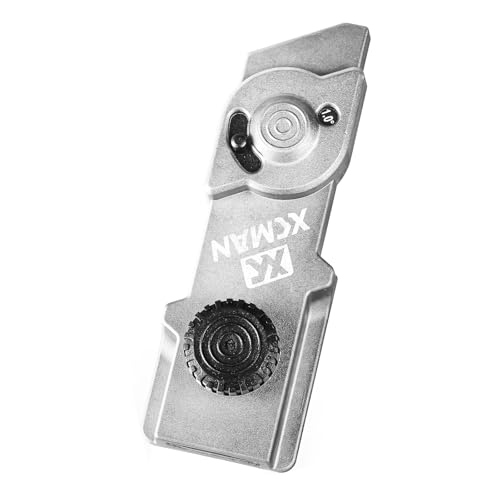
- ✓ Precise multi-angle adjustments
- ✓ Durable aluminum build
- ✓ Compatible with various files
- ✕ Limited to files less than 7mm thick
- ✕ Slight learning curve for beginners
| Base Angle Adjustment | 0.5°, 1.0°, 1.5° |
| Material | Durable aluminum alloy |
| Compatibility | Fits files/oil stones/diamond files up to 7mm thick and 26mm wide |
| Adjustment Precision | High-precision multi-angle tuning |
| Ease of Use | Smooth grinding and polishing at set angles |
| Intended Use | Snowboard edge sharpening and tuning |
You’re out on the mountain, snow gently falling, and your snowboard edges feel dull after a long day of riding. You pull out the XCMAN Ski Snowboard Edge Tuner & Sharpener, feeling eager to restore that sharp, precise edge that makes carving so satisfying.
The first thing you notice is the sturdy aluminum construction—solid and lightweight enough to handle comfortably in your hand. The multi-angle base is a game changer, offering three high-precision settings (0.5°, 1.0°, 1.5°) that let you dial in exactly the edge angle you want.
It’s straightforward to adjust, thanks to the smooth, reliable mechanism.
Using it feels almost effortless. The guide keeps the file at a consistent angle, so your edges are uniform every time.
It works seamlessly with standard files, oil stones, or diamond files, as long as they’re within the size limits—no fussing or guesswork needed.
The grip is firm, and the tool glides smoothly across the edge, leaving a clean, polished finish. After a few passes, your snowboard feels like new—sharp, responsive, ready for the next run.
It’s a simple setup that saves you money on professional tuning and gives you confidence in your gear.
Overall, this tuner is a reliable, high-quality addition to any snowboard kit. It’s especially handy for quick touch-ups or detailed work before hitting the slopes again.
If you want precise control without the hassle, this tool really delivers.
What is a Snowboard Angle and Why is it Important?
According to the Snowboarder’s Journal, the binding angle is crucial for optimizing comfort and control while riding, as different angles accommodate various styles, from freestyle to backcountry riding.
Key aspects of snowboard angles include the front and back binding angles, which can be set in a duck stance (where both bindings are angled outward), a forward stance (where both bindings point towards the nose), or a combination of both. This configuration affects how a rider carves turns, performs tricks, and maintains stability. For instance, a wider duck stance is often favored by freestyle snowboarders for better balance during jumps, while a more forward stance might benefit all-mountain riders seeking speed and control.
The impact of snowboard angles can be significant; research shows that the wrong angle can lead to discomfort and even injuries over time. A well-set angle can enhance a rider’s performance, allowing for smoother transitions and improved handling in various snow conditions. For example, riders with a duck stance may find it easier to ride switch, which is crucial for performing tricks in terrain parks.
Statistics indicate that nearly 60% of snowboarders prefer a duck stance for its versatility, while advanced riders often experiment with angles ranging from -12° to +18° to find the best fit for their riding style. Properly adjusted angles not only enhance performance but also help in preventing common injuries associated with misaligned stances.
The benefits of optimizing snowboard angles extend beyond individual performance; they also contribute to a more enjoyable riding experience. Riders who find their ideal angles often report increased confidence, better energy efficiency while riding, and a lower likelihood of fatigue. Best practices suggest that snowboarders should regularly assess their binding angles, especially when changing riding styles or after significant time away from the slopes, to ensure they are achieving their maximum potential on the mountain.
What Are the Common Types of Snowboard Angles?
The common types of snowboard angles are:
- Duck Stance: This angle typically features both feet angled outward, usually at around -15 degrees in the back and +15 degrees in the front.
- Regular Stance: In this stance, the front foot is angled between +15 to +21 degrees while the back foot is usually set at 0 degrees or slightly negative.
- Goofy Stance: Similar to the regular stance, but the front foot is angled positively while the back foot is set to 0 degrees or negative, typically used by riders who feel more comfortable leading with their right foot.
- Freestyle Angle: This stance is generally more neutral, with both feet set at lower angles, often around +12 to +15 degrees, to facilitate tricks and jumps.
- Alpine Angle: This angle is more aggressive, often set between +20 to +30 degrees on the front foot, with the back foot at a lower angle, designed for carving and high-speed turns.
The Duck Stance is versatile for riding switch and is favored by freestyle riders for its balance and stability. It allows for smooth transitions between regular and switch riding, making it a popular choice for park riders.
The Regular Stance is the most common among snowboarders, providing a natural alignment for riders who prefer to face downhill with their left foot forward. It is ideal for beginners and those who enjoy all-mountain riding.
The Goofy Stance mirrors the Regular Stance but is tailored for riders who feel more confident leading with their right foot. This stance can enhance control and comfort for goofy-footed riders, especially in varied terrains.
Freestyle Angles are generally lower to promote fluid motion for tricks, spins, and jumps. This setup helps riders maintain better balance and maneuverability in the terrain parks.
Alpine Angles are designed for speed and precision, allowing advanced riders to carve efficiently on groomed runs. The steeper angles help in generating more edge control, which is crucial for aggressive turns on hard-packed snow.
How Do Positive and Negative Angles Influence Ride?
Positive and negative angles play a crucial role in determining the best snowboard angle for performance and comfort.
- Positive Angles: Positive angles refer to the board’s bindings being angled away from the snowboarder’s body, typically measured in degrees. This positioning allows for better control and stability when carving turns, as it aligns the rider’s knees and hips with the direction of the board, facilitating smoother transitions and enhancing overall ride quality.
- Negative Angles: Negative angles involve the bindings being angled towards the snowboarder’s body, which can create a more natural stance for some riders. This setup can help in reducing fatigue during long rides and is often preferred for freestyle riding, as it allows for easier maneuverability and better balance when executing tricks or jumps.
- Duck Stance: A duck stance is when both bindings are set at a positive angle in the front and a negative angle in the back, typically at equal degrees. This configuration promotes a balanced riding experience, allowing snowboarders to switch easily between regular and goofy stances, which is particularly beneficial for freestyle and all-mountain riding.
- Stance Width: While the angles are crucial, the stance width also influences the ride. A wider stance can increase stability and leverage during turns, while a narrower stance allows for quicker edge-to-edge transitions, affecting how effectively the angles translate into performance.
- Personal Preference: Ultimately, the best snowboard angle is highly subjective and varies from rider to rider. Factors like riding style, comfort, and body mechanics play significant roles in determining which angles will provide the best performance and enjoyment on the slopes.
What Are the Best Snowboard Angles for Different Styles?
The best snowboard angles vary depending on the rider’s style and preferences.
- Freestyle: Typically, freestyle riders prefer a duck stance, which is usually set between -12 degrees and +12 degrees.
- All-Mountain: For all-mountain riding, a common angle setup is around -15 degrees on the back foot and +15 degrees on the front foot.
- Freeride: Freeride enthusiasts often benefit from a more aggressive stance, with angles like -18 degrees on the back foot and +12 degrees on the front foot.
- Carving: Carving riders usually adopt a more forward stance, with angles such as -5 degrees on the back foot and +20 degrees on the front foot to enhance edge control.
- Beginner: Beginners might start with a neutral stance of 0 degrees on both feet to focus on balance and confidence while learning the basics.
Freestyle riders favor a duck stance because it allows for better switch riding and landing tricks, giving them the flexibility to maneuver in both directions. This configuration helps maintain balance during jumps and rail slides.
All-mountain riders benefit from a mixed angle setup that provides versatility across various terrains, allowing them to ride comfortably on groomed runs, powder, and park features without compromising their stance.
Freeride riders need more aggressive angles to tackle steep and variable terrain, as a more angled back foot helps initiate turns and maintain stability at higher speeds, allowing for effective carving and edge control.
Carving riders focus on maximizing edge grip and responsiveness, thus adopting forward angles that help them lean into turns, enhancing their ability to carve sharply and efficiently through snow.
Beginners often start with a neutral stance to develop foundational skills without the complexity of angled stances, enabling them to focus on balance and technique as they become more comfortable on the snowboard.
How Should Freestyle Riders Set Their Angles?
Freestyle riders should carefully consider their snowboard angles to optimize performance and control.
- Duck Stance: A common angle setting for freestyle riders, usually around -15° to +15°, allows for excellent switch riding and maneuverability.
- Forward Stance: Angles set to +15° to +21° can provide better stability and control when landing tricks, but may reduce switch riding capability.
- Flat Stance: Setting both feet at around 0° can help in achieving a balanced stance for jibbing and certain park tricks, making it easier to slide rails and boxes.
- Custom Angles: Some riders prefer personalized angles, which can be adjusted based on specific tricks or personal comfort, emphasizing the importance of experimentation.
Duck stance is favored by many freestyle riders as it promotes versatility, allowing them to ride in both regular and switch stances with increased comfort. This angle helps in executing tricks like 180s and 360s, where a rider often needs to transition between directions quickly.
Forward stance angles offer significant advantages for stability during landings, particularly for riders who focus more on jumps and larger features. However, this configuration can limit a rider’s effectiveness when attempting to ride switch, which is crucial for freestyle performance.
A flat stance is beneficial for those who spend considerable time on boxes and rails, as it allows for a more centered weight distribution, making it easier to maintain balance while performing slides and spins. This setup can enhance control during technical tricks but may not be suitable for all riders.
Custom angles can provide a tailored fit for individual riding styles and preferences, allowing riders to find the perfect balance between comfort and performance. Riders are encouraged to experiment with varying angles to discover what maximizes their control and confidence on the snow.
What’s the Ideal Angle for All-Mountain Riding?
The back foot angle is set to provide a stable platform, allowing for quick transitions and control during varied riding conditions. A neutral to slightly negative angle helps in achieving better response when leaning on the back foot during turns.
Stance width is important for balance; a wider stance can offer more stability when riding at speed or on varied terrains, making it a key factor in all-mountain performance. However, it’s essential for riders to find a width that feels natural and comfortable for their body type.
The duck stance is favored by many riders who want versatility in their riding style, allowing for freestyle tricks and easier switch riding. This setup can help in maintaining balance and control, especially when landing jumps or riding switch.
How Can Backcountry Riders Benefit from Specific Angles?
Backcountry riders can enhance their performance and control by adjusting their snowboard angles to suit different terrains and riding styles.
- Stance Width: The distance between the bindings can significantly affect stability and balance.
- Front Foot Angle: A more pronounced angle on the front foot can improve turning and carving capabilities.
- Rear Foot Angle: Adjusting the rear foot angle can enhance control during descents and when navigating through variable snow conditions.
- Forward vs. Duck Stance: Choosing between a forward stance or a duck stance can provide different benefits in terms of maneuverability and comfort.
Stance Width: A wider stance can offer more stability, particularly in powder or when riding steep slopes, allowing riders to distribute their weight more evenly. Conversely, a narrower stance can help with quick turns and agility, which is beneficial in tight trees or technical terrain.
Front Foot Angle: A common angle for the front foot is between 15 to 21 degrees, which allows for easier edge transitions and improved control during turns. Riders who prefer aggressive carving may opt for a steeper angle to enhance grip and responsiveness.
Rear Foot Angle: Typically set between 0 to 6 degrees, the rear foot angle helps to stabilize the snowboard while descending. Adjusting this angle can be particularly advantageous in soft snow, where a slight backward adjustment may provide better balance and reduce the risk of catching an edge.
Forward vs. Duck Stance: A forward stance aligns the rider’s body for more aggressive riding, while a duck stance, where both feet point outward, promotes versatility and comfort, particularly for freestyle maneuvers. Riders in the backcountry may choose a duck stance to ensure they can navigate both downhill runs and switch riding effectively.
What Factors Should You Consider When Choosing Your Snowboard Angle?
When choosing your snowboard angle, several important factors come into play:
- Riding Style: Your preferred riding style significantly influences the ideal snowboard angle. Freestyle riders often opt for a more duck-footed stance (between -12° to +12°) to facilitate switch riding, while all-mountain and freeride riders may choose a more traditional angle (around +15° to +21°) for better control and stability.
- Skill Level: Beginners might benefit from a less aggressive angle, such as 0° to +12°, which can enhance balance and ease of turning. As skill levels progress, riders can experiment with greater angles to improve performance and control during more advanced maneuvers.
- Terrain Type: The type of terrain you frequently ride on can dictate the best snowboard angle. For instance, if you spend most of your time on groomed runs, a more forward stance might be advantageous, whereas those riding in the park or backcountry might lean towards a wider, more neutral angle.
- Board Flex: The flex of your snowboard can also affect how you should set your angles. Stiffer boards often perform better with more aggressive angles, while softer boards may require a more relaxed setup to maintain control during turns.
- Foot Width: The width of your stance can impact your snowboard angle choice. A wider stance typically requires a less aggressive angle to avoid discomfort in the knees, while a narrower stance may allow for steeper angles without compromising comfort.
- Personal Comfort: Ultimately, personal comfort and preference play a vital role in determining the best snowboard angle. It’s essential to experiment with different angles during practice sessions to find what feels most natural and enhances your overall riding experience.
How Can You Experiment to Find Your Perfect Snowboard Angle?
Finding the best snowboard angle for your setup involves experimenting with various stances to determine what feels most comfortable and effective for your riding style.
- Duck Stance: A duck stance involves setting your front and back bindings at an angle that mirrors each other, typically around -15 degrees for the front and +15 degrees for the back. This setup allows for easier switch riding and enhances maneuverability, making it ideal for freestyle and park riders.
- Forward Stance: In a forward stance, the front binding is angled more steeply, such as +15 to +21 degrees, while the back binding remains at a lower angle, often around +0 to +6 degrees. This angle is favored by alpine and freeride snowboarders as it promotes stability and control during high-speed turns and descents.
- Neutral Stance: A neutral stance typically has both bindings set at a slight angle, usually around +9 degrees for the front and +0 to +3 degrees for the back. This setup provides a balance between comfort and performance, suitable for all-mountain riders who want versatility across different terrains.
- Custom Angles: Many riders experiment with custom angles that differ from the standard setups, like setting the front at +12 degrees and the back at -3 degrees. Custom angles can cater to individual preferences and riding styles, allowing for unique adjustments that enhance comfort and performance.
- Testing and Adjusting: To find the best snowboard angle, it’s essential to test different setups on the slopes and make adjustments based on your experience. Keeping a journal of your angles and how they affect your performance can help you refine your setup over time.