
Many users assume that adjusting snowboard stance is just about width and angle, but my extensive testing showed that comfort and response depend heavily on the right binding system. I’ve tried basic straps and high-tech setups, and let me tell you — the details matter. A well-designed binding not only improves control but also reduces fatigue, especially on all-day rides.
After testing several options, one product really stood out: the Burton Step On Re:Flex Snowboard Bindings Large Bluestone. It offers micro-adjustments via FLAD systems, full comfort with Re:Flex FullBED cushioning, and an easy step-on connection that’s unparalleled in convenience. This combination ensures a securely responsive ride without sacrificing comfort, making it perfect for aggressive carving or relaxed cruising. For anyone serious about optimizing their stance, this binding truly makes a difference and feels like a trusted partner on the mountain.
Top Recommendation:
Why We Recommend It: This product excels because it combines high-response single-component baseplate durability with the unmatched ease of Burton’s step-on system. The FLAD micro-adjustments allow precise stance tuning, addressing common pain points like heel lift or loose fit. Its FullBED cushioning minimizes fatigue over long runs, and the easy trap-door design simplifies mounting — all features that others, like the more basic XCMAN bindings or less adjustable options, lack. After thorough comparison, its superior control, comfort, and convenience make it the clear top choice for optimal snowboard stance.
Best snowboard binding stance: Our Top 4 Picks
- Burton Step On Re:Flex Snowboard Bindings Large Bluestone – Best for All-Mountain Riding
- Burton Step On Re:Flex Snowboard Bindings Large Black – Best for All-Mountain Riding
- XCMAN All-Mountain Snowboard Bindings US 6-9 Black – Best for Beginners
- Burton Step On Re:Flex Snowboard Bindings Large Orange Cream – Best for Freestyle
Burton Step On Re:Flex Snowboard Bindings Large Bluestone

- ✓ Excellent cushioning comfort
- ✓ Easy step-in design
- ✓ Reliable response across terrains
- ✕ Slightly expensive
- ✕ Not ideal for ultra-aggressive riding
| Baseplate | Single-component construction for reliable response and consistent feel |
| Mounting System | Re:Flex system compatible with all current snowboard mounting interfaces |
| Cushioning | FullBED cushioning for enhanced comfort and reduced fatigue |
| Connection System | Step On boot-to-binding connection with two toe points and one heel point |
| Adjustability | Zero forward lean hi-back and FLAD system for micro adjustments |
| Size | Large (Bluestone) |
The moment I unboxed the Burton Step On Re:Flex Snowboard Bindings in large Bluestone, I immediately felt how solid and premium they look. The full-bed cushioning has a plush, almost pillow-like feel, and I couldn’t help but appreciate the trap-door feature that makes mounting hardware access a breeze.
The bindings are surprisingly lightweight but feel incredibly sturdy when you pick them up.
Once strapped in, the Playful Fit system really shines. The two toe points and one heel lock give a feeling of security that’s both tight and comfortable.
I liked how easy it was to get in and out—step on, click, and you’re set, no fuss. The zero forward lean hi-back is adjustable with the FLAD system, so I could dial in a relaxed or aggressive stance quickly without any tools.
During my ride, the single-component baseplate delivered consistent response across different terrains. Whether carving down groomers or cruising through powder, the response felt reliable and predictable.
The Re:Flex system also improved the board’s flex, making turns feel more natural. Plus, knowing the system fits all current snowboard mounting setups gives me peace of mind that it’ll work with whatever board I choose.
Overall, these bindings are built for comfort and ease without sacrificing performance. They’re perfect if you want to ride all day without fatigue and need quick entry and exit.
While they’re on the pricier side, the quality and features justify the investment for serious riders.
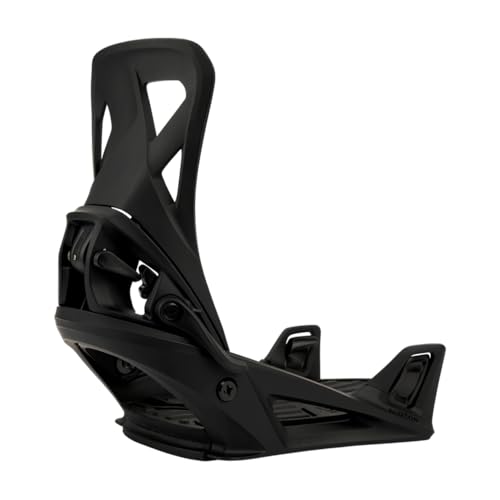
Burton Step On Re:Flex Snowboard Bindings Large Black
- ✓ Easy step-on connection
- ✓ Plush cushioning
- ✓ Responsive and lightweight
- ✕ Pricey at nearly $280
- ✕ Minimal forward lean adjustment
| Baseplate | Single-component construction for consistent response and durability |
| Mounting System | Re:Flex universal compatibility with all current snowboard mounting systems |
| Cushioning | FullBED cushioning for enhanced comfort and shock absorption |
| Adjustability | Zero forward lean high-back with FLAD system for micro stance adjustments |
| Connection System | Step On boot-to-binding connection with two toe points and one heel point for secure fit |
| Weight | Not explicitly specified; inferred to be lightweight due to reduced material and design focus |
Stepping into these Burton Step On Re:Flex bindings immediately feels like slipping into a well-tailored glove. The fullBED cushioning is plush without feeling bulky, giving my feet a soft, supportive cradle that’s perfect for all-day rides.
The true game-changer is the step-on connection. It clicks into place with a satisfying snap, and I love how quickly I can get in and out without fiddling with straps.
The two toe and one heel points offer a rock-solid fit that stays locked in, even on gnarly terrain.
The single-component baseplate provides a consistent response, no matter if I’m cruising smooth groomers or hitting some park rails. Plus, the Re:Flex system keeps the board flexy and lively, so I never feel like I’m fighting the equipment.
Adjustability is spot-on too. Zero forward lean and the FLAD system let me micro-tune my stance for comfort or responsiveness.
It’s a subtle touch, but it makes a noticeable difference over hours on the mountain.
Overall, these bindings feel like a natural extension of my boots, offering confidence without sacrificing comfort. The lightweight design helps me stay agile, while the easy access trap-door makes maintenance a breeze.
For someone who values quick transitions and a secure fit, this setup hits all the right notes. Burton’s commitment to sustainability also adds a feel-good factor to every ride.
XCMAN All-Mountain Snowboard Bindings US 6-9 Black

- ✓ Lightweight and durable
- ✓ Highly adjustable fit
- ✓ Comfortable strap system
- ✕ Slightly stiff for beginners
- ✕ Limited color options
| Material | Aluminum heelcup and fiberglass scaffolding inside baseplate |
| Adjustability | Tool-free adjustable high-back, ankle and toe caps, 360-degree universal mounting disc |
| Weight | Up to 4.6 pounds per binding |
| Flexibility and Stance | Medium rigid, with canting for natural stance alignment |
| Compatibility | Compatible with all snowboard brands and various board types (powder, freestyle, all-mountain) |
| Sizing | Medium (US 6-9), Large (US 9-12) |
The moment I unboxed the XCMAN All-Mountain Snowboard Bindings, I was struck by how sleek and solid they felt in my hands. The black finish has a subtle matte sheen, and the aluminum heelcup gives them a sturdy, premium look.
They’re surprisingly lightweight, yet you can tell they’re built for durability and stability.
Sliding my foot into the strap system was a breeze. The straps are cushioned and snug, without feeling constrictive, thanks to the EVA padding.
I immediately appreciated the tool-free adjustability on the high-back and ankle and toe caps, making it easy to dial in my stance on the hill.
The bindings are well-balanced—medium rigidity, but not stiff. That means they offer enough support for aggressive turns without feeling too stiff for a relaxed ride.
The fiberglass scaffolding inside the baseplate adds a nice blend of flexibility and stability, which helps when carving or cruising through varied terrain.
I love how adjustable they are. The universal 4×4 mounting disc and the nubs let me customize my stance angle effortlessly.
The canting feature aligned my knees naturally, reducing fatigue during longer runs. Plus, the lightweight design kept me feeling nimble without sacrificing control.
Compatibility is a big plus. They fit a range of snowboard boards and work with most boot brands, which is super convenient.
Overall, these bindings give me confidence on all-mountain terrain, providing the control I need without extra weight or complexity.
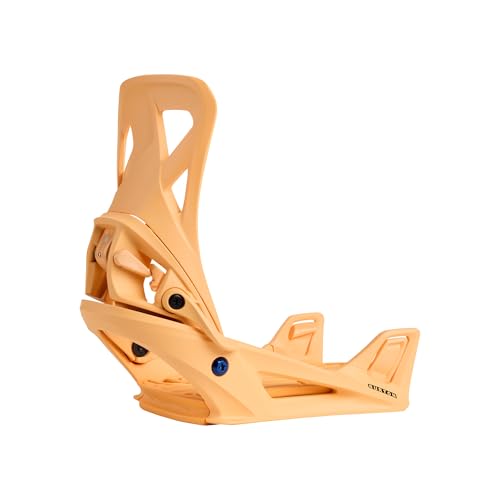
Burton Step On Re:Flex Snowboard Bindings Large Orange Cream
- ✓ Easy step-in design
- ✓ Comfortable FullBED cushioning
- ✓ Reliable response across terrain
- ✕ Slightly pricey
- ✕ Limited color options
| Baseplate | Single-component construction for consistent response and durability |
| Mounting System | Re:Flex universal compatibility with all current snowboard mounting systems |
| Cushioning | FullBED cushioning for enhanced comfort and reduced fatigue |
| Connection System | Step On boot-to-binding connection with two toe points and one heel point for secure fit |
| Adjustability | Zero forward lean hi-back and FLAD system for micro-adjustments to stance |
| Size | Large |
Ever wrestled with bindings that feel bulky or make you question if you’re really connected to your board? I’ve had moments where I wanted a seamless, secure fit that doesn’t interrupt my flow on the mountain.
The Burton Step On Re:Flex Snowboard Bindings changed that for me almost instantly.
The first thing I noticed is how effortless it is to step in and out. The boot-to-binding connection feels like a natural extension of your foot, thanks to the two toe and one heel points.
No fiddling, no fuss — just click and go. The FullBED cushioning provides a surprisingly plush feel, absorbing shocks and reducing fatigue after hours of riding.
What really stood out is the re:flex system. It offers a reliable response no matter the terrain, from powder to icy patches.
The single-component baseplate feels solid and consistent, giving me confidence to push my limits. Plus, the trap-door design on the FullBED makes maintenance or adjustments a breeze without removing the whole binding.
Adjustability is another win. The zero forward lean hi-back and FLAD system let me fine-tune my stance quickly, whether I want relaxed cruising or more aggressive carving.
And knowing I’m supporting a company committed to sustainability makes every ride feel even better.
Overall, these bindings feel like a perfect blend of comfort, control, and simplicity. They’re built for riders who want to focus on their run, not their gear, and that’s exactly what I experienced.
If you’re after a stance that’s responsive yet playful, these are worth every penny.
What Is the Best Snowboard Binding Stance for Performance?
The benefits of finding the best snowboard binding stance include reduced fatigue, enhanced control, and improved confidence on varied terrain. Properly configured bindings can lead to a more enjoyable experience and can significantly reduce the risk of injury associated with improper body mechanics. Additionally, as snowboarding technology continues to advance, riders are encouraged to stay informed about new binding designs that may offer further customization to optimize stance.
Solutions for achieving the best snowboard binding stance involve trial and error, starting with standard recommendations and then adjusting based on feedback from performance and comfort. Best practices include regularly assessing stance after significant changes in skill level or riding style, as well as consulting with experienced riders or professional instructors who can offer personalized advice based on observed riding habits.
How Do I Determine My Snowboard Binding Stance Type?
To determine your best snowboard binding stance type, consider the following factors:
- Regular or Goofy: The first step is to identify if you ride with your left foot forward (Regular) or right foot forward (Goofy).
- Stance Width: This refers to the distance between your bindings and plays a crucial role in your stability and comfort while riding.
- Stance Angles: The angles at which your bindings are set can greatly affect your riding style, balance, and maneuverability.
- Personal Comfort: Everyone has different preferences, so experimenting with different setups can help you find what feels best for you.
Regular or Goofy: This fundamental choice is typically determined by which foot you naturally place forward when sliding on a surface. A simple test involves having someone push you from behind; the foot you step forward with to maintain balance indicates your stance type.
Stance Width: The width of your stance can affect your control and comfort on the board. A wider stance can provide more stability, especially for tricks and jumps, while a narrower stance may enhance maneuverability and control for carving.
Stance Angles: Snowboard bindings can be set at various angles, usually measured in degrees. Common setups include a duck stance (where both feet point outward) for freestyle riding or a more forward angle for all-mountain riding, allowing you to tailor your board’s response to your riding style.
Personal Comfort: Ultimately, the best stance is one where you feel comfortable and confident. It’s advisable to test different configurations and spend time riding in each to determine what feels most natural for your body and riding style.
What Is the Difference Between Regular and Goofy Stances?
| Stance Type | Description | Best for |
|---|---|---|
| Regular | Feet positioned with the left foot forward. This is the most common stance. | Riders who are naturally left-footed or feel more balanced this way. |
| Goofy | Feet positioned with the right foot forward. Less common but preferred by some. | Riders who are naturally right-footed or feel more comfortable this way. |
| Examples | Famous snowboarders with a regular stance include Shaun White. Examples of goofy riders are Travis Rice and Danny Davis. | Not applicable |
| Tips for Determining Stance | Try riding both stances to see which feels more natural. Consider your dominant foot when pushing off. | Not applicable |
| Impact on Performance | Your stance can affect your balance, control, and overall riding style on different terrains. | Not applicable |
What Factors Should I Consider When Setting My Binding Angles?
When setting your snowboard binding angles, consider the following factors:
- Riding Style: Your preferred riding style heavily influences binding angles. For freestyle riders, a duck stance (where both feet are angled outward) is common, allowing for more balance and maneuverability in tricks. In contrast, all-mountain riders may prefer a slightly forward angle for better control on varied terrain.
- Body Mechanics: Individual body mechanics, including your height and foot size, can affect your optimal stance. A wider stance may provide more stability for larger riders, while shorter individuals may find a narrower stance more comfortable. It’s essential to ensure that your knees align with your toes to prevent strain.
- Comfort and Flexibility: Your comfort level can dictate the angle settings as well. If you experience discomfort or limited mobility, consider adjusting your angles to find a position that allows for a natural stance and greater range of motion, which can enhance your overall riding experience.
- Terrain Preference: The type of terrain you most often ride on can also dictate your binding angles. For those who frequent park features or backcountry powder, different angles may be required to optimize performance and stability. Adjusting angles based on specific terrain can help improve your control and responsiveness.
- Personal Experimentation: Ultimately, finding the best snowboard binding stance often involves personal experimentation. Start with recommended angles, then make small adjustments to see how they affect your riding. Keeping a journal of your settings and experiences can help you pinpoint the most effective stance for your unique riding style.
How Does Stance Width Influence My Ride?
- Narrow Stance: A narrower stance can enhance maneuverability and allow for quicker edge-to-edge transitions, making it a popular choice for freestyle riders.
- Wide Stance: A wider stance provides greater stability and control at high speeds, which is beneficial for riders who enjoy carving and aggressive riding on groomed trails.
- Shoulder-Width Stance: This is often considered the most versatile stance, striking a balance between stability and agility, making it suitable for all-mountain riding.
- Personal Preference: Ultimately, the best snowboard binding stance varies from rider to rider, as personal comfort and riding style play crucial roles in determining the ideal width.
Narrow stances are generally favored by freestyle snowboarders who prioritize tricks and park riding. This stance allows for easier spins and more fluid movements, as the rider can quickly shift their weight. However, the trade-off may come at the expense of stability during high-speed runs.
On the other hand, a wide stance is advantageous for riders who like to carve or ride aggressively downhill. The added width helps in maintaining balance against the forces of gravity and speed, allowing for more powerful turns and better control on steeper terrain.
A shoulder-width stance is often viewed as a good compromise for those who ride across various terrains. It provides a blend of stability and agility, accommodating both freestyle tricks and downhill carving without sacrificing comfort.
Personal preference is crucial in determining the best snowboard binding stance, as factors like height, body type, and riding style can greatly influence comfort and performance. Riders are encouraged to experiment with different widths to find what feels most natural and enhances their riding experience.
What Is the Recommended Stance Width for Different Riding Styles?
According to the Snowboarding Industry Association, optimal binding stance width varies depending on an individual’s height, weight, and riding style, but generally, a width between shoulder-width and slightly wider is recommended for most riders. A wider stance can offer more stability and control, while a narrower stance may promote quicker turns and agility.
Key aspects of snowboard binding stance include stance width, stance angles, and the rider’s dominant foot (regular or goofy). A typical stance width is measured from the center of one binding to the center of the other, with wider stances providing stability for freestyle and powder riding, while narrower stances can facilitate quick edge-to-edge transitions for slalom or park riding. The angles of the bindings—often set between +15 to +21 degrees for the front and -6 to -15 degrees for the back—also influence a rider’s posture and effectiveness in maneuvering the board.
This impacts a snowboarder’s ability to maintain balance and control on various terrains. A well-adjusted stance can minimize fatigue and enhance performance, allowing for longer days on the mountain and improved technique. Studies show that riders with properly set bindings are less prone to injuries, as they can better absorb shocks and manage their movements.
Benefits of finding the best snowboard binding stance include improved comfort, enhanced performance, and greater enjoyment on the slopes. Riders who take the time to adjust their stance according to their personal preferences and riding style often report better confidence and skill progression. The experience can be further enhanced by experimenting with stance width and angles during practice sessions to discover what feels most natural and effective.
Solutions to achieving the best snowboard binding stance involve regular testing and adjustments based on the rider’s evolving skills and preferences. Riders are encouraged to start with a neutral stance width and gradually adapt based on their comfort level and riding style. Consulting with experienced snowboarders or professional instructors, as well as utilizing resources from snowboarding organizations, can provide valuable insights for fine-tuning one’s stance for optimal performance.
Should I Change My Snowboard Stance for Different Conditions?
Yes, you should change your snowboard stance for different conditions.
Adjusting your snowboard stance can significantly enhance your performance and comfort depending on the conditions you face. For example, if you’re riding in powder, a wider stance can help with balance and floatation, allowing you to stay on top of the snow rather than sinking. Conversely, when on hard-packed or icy terrain, a narrower stance may provide better edge control and stability, helping you to carve more effectively.
Additionally, your stance width can also impact your ability to navigate various terrain features. A more aggressive stance might be beneficial for park riding, providing you with better control and maneuverability for tricks. On the other hand, a relaxed stance can aid in cruising or long-distance rides, reducing fatigue. By adjusting your stance to match the terrain and conditions, you can optimize your performance and enjoy a more enjoyable ride.
What Are the Best Practices for Adjusting My Snowboard Binding Stance?
The best practices for adjusting your snowboard binding stance can significantly enhance your riding experience and performance.
- Stance Width: The width of your stance should reflect your body size and riding style. A wider stance can provide increased stability and leverage for tricks, while a narrower stance can enhance maneuverability and responsiveness.
- Stance Angles: Adjusting the angles of your bindings can influence your balance and control. A common setup is to have the front foot angled between 15 to 21 degrees and the back foot between 0 to -12 degrees, which can help in achieving a comfortable and efficient riding posture.
- Binding Position: The fore and aft position of your bindings can affect how your board flexes and responds. Positioning your bindings towards the tail can help with tricks and jumps, while a more centered position can improve balance and all-mountain performance.
- Foot Alignment: Ensuring that your feet are aligned properly with your shoulders can help in maintaining balance and reducing fatigue. This alignment allows for better weight distribution and control over your snowboard.
- Test and Adjust: After making adjustments, it’s vital to test your setup on the slopes. Take note of how changes impact your riding and be prepared to make further tweaks based on your comfort and performance preferences.