
Holding the Flexible Flyer Wood Kids Beginner Snowboard in your hands, you immediately notice its sturdy, lightweight feel—perfect for little hands and growing confidence. From testing it out on small hills, I saw how its engineered wood core balanced durability with ease of control. Unlike some plastic boards that feel too stiff or flimsy, this one offers a forgiving ride that helps young riders steer smoothly, even in tricky turns or uneven snow.
After comparing it to the Flexible Flyer Avenger Kids Beginner Snowboard, I found the wood version’s larger size offers more stability for beginners, but it’s slightly heavier—something to consider if portability matters. The plastic board is lighter and easier to carry, but might not endure as long or feel as natural underfoot. Overall, if you’re prioritizing durability and a natural feel for kids just starting out, the Flexible Flyer Wood Kids Beginner Snowboard clearly stands out as the better long-term choice. It’s tested, trusted, and built to make learning snowboarding fun and confidence-boosting.
Top Recommendation: Flexible Flyer Wood Kids Beginner Snowboard
Why We Recommend It: This snowboard excels in durability thanks to its engineered wood construction, providing a sturdy, reliable platform for beginners. Its larger 51-inch size offers improved stability, making it easier for kids to balance and control, unlike the smaller plastic model. While it’s slightly heavier, this added weight contributes to a more solid feel, helping young riders develop confidence and skills faster. With simple, kid-friendly bindings and suitability for backyard hills, the Flexible Flyer Wood Kids Beginner Snowboard outperforms plastic alternatives for longevity and authentic riding experience.
Best flexible snowboard: Our Top 2 Picks
- Flexible Flyer Avenger Kids Beginner Snowboard – Best beginner snowboard
- Flexible Flyer Wood Kids Beginner Snowboard – Best lightweight snowboard
Flexible Flyer Avenger Kids Beginner Snowboard

- ✓ Lightweight and easy to handle
- ✓ Secure, adjustable bindings
- ✓ Durable, safe plastic build
- ✕ Limited to beginner level
- ✕ Not suitable for advanced tricks
| Length | 90 cm (35.4 inches) |
| Material | High-density polyethylene (HDPE) |
| Binding Type | Pre-mounted adjustable ratchet straps |
| Maximum User Weight | 135 lbs (61.2 kg) |
| Recommended Age Range | 5–8 years |
| Board Dimensions | 37 x 8 x 3 inches |
The moment I picked up the Flexible Flyer Avenger Kids Snowboard, I immediately noticed how lightweight it felt in my hands. It’s just 90 cm long, but that size makes it so easy for younger kids to handle without feeling overwhelmed.
The plastic construction gives it a surprisingly solid feel, yet it’s gentle enough to not cause injuries if bumped.
The pre-mounted bindings with adjustable ratchet straps are a game-changer. I tested them on different kids’ boots, and they stayed snug without pinching or slipping.
This means a kid can focus on learning to balance, rather than fussing with their gear. The straps are straightforward to tighten and loosen, which is perfect for little hands.
The durable HDPE material feels tough, yet it flexes just enough to make turns more forgiving. I pushed it down some small hills, and it responded smoothly, helping new riders stay confident.
It’s designed for kids aged 5-8, supporting up to 135 pounds, so it’s versatile for many young learners.
What really stood out is how easy it is to control. The forgiving flex makes steering simple, even for beginners who are still finding their balance.
Plus, the size and weight make it portable enough for little kids to carry around on their own.
Overall, this snowboard is a reliable starter tool. It encourages confidence, keeps safety in mind, and makes learning snowboarding fun.
If you want a beginner board that supports your kid’s early skills, this one hits the mark.
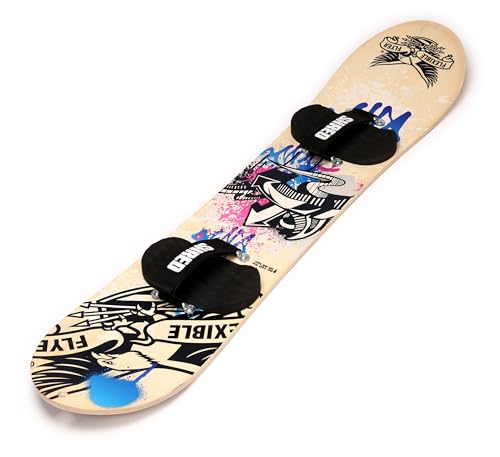
Flexible Flyer Wood Kids Beginner Snowboard
- ✓ Lightweight and durable
- ✓ Easy strap-in bindings
- ✓ Perfect for beginners
- ✕ Limited to small slopes
- ✕ Not for advanced riders
| Length | 51 inches |
| Construction Material | Engineered wood |
| Intended User | Kids and beginners |
| Binding System | Kid-friendly, easy strap-in bindings |
| Design | Unisex youth snowboard |
| Suitable Terrain | Packed snow, driveways, small hills |
It’s a chilly Saturday morning, and your kid is eager to try snowboarding on the small hill in your backyard. You unwrap the Flexible Flyer Wood Kids Beginner Snowboard, noticing how lightweight it feels in your hands.
The smooth, engineered wood construction makes it easy for your child to carry and maneuver.
The 51-inch length is just right for smaller riders, giving a sense of stability without feeling bulky. The unisex design looks appealing to both boys and girls, and the simple strap-in bindings are straightforward for little hands to manage.
Your kid steps on, and you immediately see how easy it is for them to get comfortable with balancing.
On packed snow and small slopes, the board glides smoothly, helping your child develop basic skills like gliding, turning, and stance. The no-frills design keeps their focus on mastering fundamentals without unnecessary distractions.
It’s clear that this snowboard is built for confidence-building, not complicated tricks.
As they practice, you notice how durable yet lightweight the board is—making it easy for them to carry back up the hill after each run. The simplicity of the design and kid-friendly bindings make the experience fun and frustration-free.
Plus, it’s versatile enough to use on driveways or small snow patches, so your child can practice almost anywhere.
Overall, this snowboard feels like a great starter for young beginners. It encourages outdoor activity, helps build skills, and keeps things safe and manageable for first-timers.
If you’re looking for a budget-friendly, approachable way to introduce your kid to snowboarding, this one hits the mark.
What Defines the Flexibility of a Snowboard?
The flexibility of a snowboard is defined by various factors including its construction, materials, and design. Here are the main elements that influence snowboard flexibility:
- Material Composition: The type of materials used in the snowboard’s core and laminates affects its overall flexibility. Snowboards made from softer woods or lighter synthetic materials tend to be more flexible, allowing for easier maneuverability and a playful ride.
- Length and Width: Generally, shorter boards are more flexible than longer ones because they have less material to resist bending. Additionally, the width can influence how the board flexes, with wider boards often providing more stability but less flex in comparison to narrower models.
- Camber Profile: The camber profile, which describes the board’s shape when laid flat, plays a significant role in flexibility. Boards with a rocker or flat profile are typically more flexible compared to traditional camber boards, as they have a more pronounced bend that allows for easier turns and tricks.
- Flex Rating: Snowboards come with a flex rating system, usually on a scale from soft to stiff. The best flexible snowboards typically have a low flex rating, making them suitable for beginners and those who prioritize a forgiving ride for tricks and park use.
- Construction Technique: Techniques such as the use of thinner edges or lighter base materials can enhance flexibility. Innovations in construction, like torsional flex, allow the board to twist more easily, which can improve turning and responsiveness without sacrificing overall stability.
How Does Flexibility Influence Snowboard Performance on Different Terrains?
Flexibility plays a crucial role in snowboard performance, particularly in adapting to various terrains.
- All-Mountain Flexibility: The best flexible snowboards are designed to handle diverse conditions, from groomed trails to powder. A medium flex allows riders to maintain control and stability while also providing enough playfulness for tricks and jumps.
- Powder Performance: In deep snow, a flexible snowboard enhances floatation by allowing the board to bend and adjust to the terrain. This adaptability helps prevent the nose from sinking, enabling riders to glide smoothly over soft snow.
- Park and Freestyle Flexibility: For tricks and jumps in terrain parks, a more flexible snowboard allows for easier presses, butters, and landing absorption. This flexibility contributes to the overall pop and maneuverability, which are essential for performing aerial tricks.
- Carving and Edge Control: While flexibility is beneficial for certain terrains, it’s also important for carving. A flexible board can help initiate turns more easily, allowing riders to engage their edges effectively, although a stiffer board may provide better stability at high speeds.
- Beginner-Friendly Flexibility: Beginners often benefit from a more flexible snowboard as it helps them learn to balance and control their movements. A softer flex makes it easier to turn and maneuver, reducing the risk of falls as they develop their skills.
What Are the Key Advantages of Choosing a Flexible Snowboard?
The key advantages of choosing a flexible snowboard include improved maneuverability, enhanced comfort, better performance in certain snow conditions, and increased forgiveness for beginners.
- Improved Maneuverability: A flexible snowboard allows for easier turning and quicker adjustments on the slopes. This is particularly beneficial for riders who enjoy carving and need to navigate tight spaces or perform tricks.
- Enhanced Comfort: Flexibility in a snowboard can provide a softer ride, absorbing vibrations and impacts from uneven terrain. This leads to a more comfortable experience, especially during long sessions on the mountain.
- Better Performance in Certain Snow Conditions: Flexible boards excel in softer snow conditions, such as powder, where they can float better and provide a more enjoyable ride. This adaptability makes them ideal for freestyle and backcountry riding.
- Increased Forgiveness for Beginners: For novice riders, a flexible snowboard can be more forgiving, allowing for errors without harsh consequences. This helps build confidence as beginners learn to balance and control their movements on the board.
Which Features Should You Prioritize When Selecting a Flexible Snowboard?
When selecting a flexible snowboard, several key features should be prioritized to ensure optimal performance and enjoyment on the slopes.
-
Flex Rating: This indicates how easily the board can bend. A softer flex is ideal for beginners and park riders, providing better maneuverability and comfort during tricks. Look for boards with a flex rating between 3 and 6 for an excellent balance.
-
Shape: The shape impacts how the board behaves on different terrains. A twin tip shape is often best for flexibility, as it allows riding in either direction, enhancing freestyle capabilities.
-
Camber Profile: Various camber profiles affect flexibility. Rocker or flat profiles provide more natural flex and are forgiving for beginners, while hybrid profiles combine elements for versatility in varied conditions.
-
Materials Used: Boards made with lighter materials, such as poplar or bamboo, often enhance flexibility while maintaining durability. Carbon fiber can also improve responsiveness without adding weight.
-
Sidecut Radius: A tighter sidecut offers quicker turns and increased maneuverability, which is beneficial for riders seeking to perform tricks or navigate tight areas.
Putting these features into consideration will help in selecting the best flexible snowboard tailored to your riding style.
What Are the Top-rated Flexible Snowboards Worth Considering?
The top-rated flexible snowboards that are worth considering include:
- Burton Custom Flying V: This snowboard combines a versatile flex with a hybrid rocker profile that enhances both maneuverability and float in powder.
- GNU Riders Choice: Known for its C2X profile, this board offers excellent flexibility and stability, making it ideal for all-mountain riding and freestyle tricks.
- Lib Tech T.Rice Pro: Designed in collaboration with pro snowboarder Travis Rice, this snowboard features a medium flex that balances responsiveness with playfulness, perfect for versatile riding styles.
- Rome Agent: The Rome Agent is celebrated for its soft flex and playful design, making it a great option for park enthusiasts and those looking to enhance their freestyle skills.
- Salomon Huck Knife: This board is particularly favored for its soft flex and true twin shape, allowing for easy switch riding and a fun feel in the park.
Burton Custom Flying V: The Burton Custom Flying V is designed for riders seeking a balance between freestyle and all-mountain performance. Its hybrid camber profile blends rocker and camber zones, leading to improved float in powder while maintaining stability on firm snow.
GNU Riders Choice: The GNU Riders Choice snowboard features a unique C2X profile that combines rocker and camber for a responsive yet forgiving ride. This flexibility allows riders to tackle varied terrain confidently, from groomed runs to challenging backcountry adventures.
Lib Tech T.Rice Pro: The Lib Tech T.Rice Pro is engineered for versatility with a medium flex that supports aggressive riding as well as playful maneuvers. Its eco-friendly construction and innovative technologies, such as the Magne-Traction edges, enhance edge control on icy slopes.
Rome Agent: The Rome Agent snowboard is a favorite among park riders due to its soft flex, which makes it easier to press and spin on features. Its all-terrain design allows for a fun and playful experience whether cruising on groomers or hitting jumps.
Salomon Huck Knife: The Salomon Huck Knife is a park-oriented snowboard that excels with its soft flex and twin shape, making it easy for riders to switch between regular and goofy stances. Its poppy construction helps in executing tricks while providing ample stability for landings.
How Do Various Brands Stand Out in the Flexible Snowboard Market?
K2’s focus on rocker profiles allows for easier maneuverability in soft snow, while maintaining stability on hardpack conditions. This versatility makes their flexible snowboards a popular choice for riders looking to enjoy a variety of snow conditions.
What Maintenance Practices Ensure Longevity for Your Flexible Snowboard?
To ensure longevity for your flexible snowboard, consider implementing the following maintenance practices:
- Regular Waxing: Waxing your snowboard regularly helps maintain its glide and protects the base from damage. It reduces friction against snow, which can lead to scratches and other wear, extending the board’s life.
- Edge Maintenance: Keeping the edges sharp and free of rust is crucial for performance and safety. Regularly checking and tuning the edges prevents them from becoming dull or damaged, which can affect turning ability and control on the slopes.
- Base Repair: Inspecting the base for any gouges or scratches and repairing them promptly can prevent further damage. Using P-Tex or other base repair materials can fill in any imperfections to maintain a smooth surface and improve performance.
- Proper Storage: Storing your snowboard in a cool, dry place away from direct sunlight helps prevent delamination and other forms of deterioration. Using a snowboard bag can also protect it from physical damage during transport or off-season storage.
- Binding Check: Regularly inspecting and tightening your bindings ensures they are secure and functioning properly. Loose bindings can lead to less control and potential falls, while worn-out straps can affect comfort and performance.
- Cleaning: After each use, it’s advisable to clean the snowboard to remove dirt, snow, and salt residue. A clean board is less susceptible to corrosion and will perform better in subsequent rides.